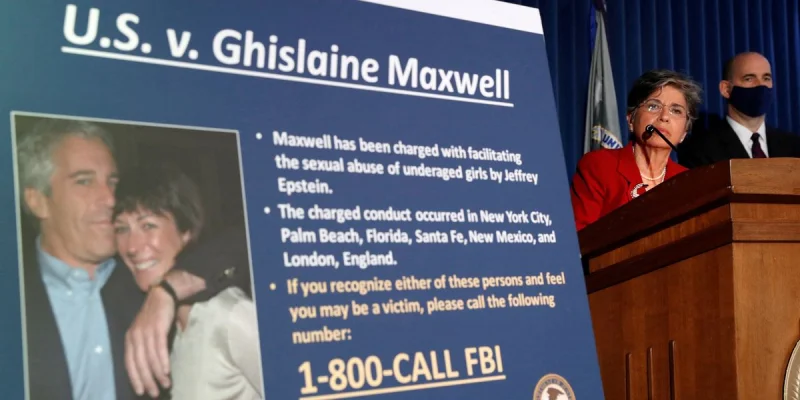
Ghislaine Maxwell’s latest bid to overturn her conviction was rejected last week, leaving her with only a narrow set of options and putting fresh focus on whether any court can still take up her case. Paul Engelmayer rejected her claim that her constitutional rights were violated at trial and sentencing, and he said her arguments were “all meritless and all or almost all frivolous.”
The ruling matters now because Maxwell has already lost her direct appeals, and her effort at the Supreme Court failed when the justices declined to review her case. That means the latest decision does not just preserve the status quo. It pushes her closer to the point where the system she has been fighting in for years may simply have no more doors left to open.
Engelmayer also turned aside Maxwell’s argument that new evidence tied to Epstein Files Transparency Act disclosures proved constitutional violations in her case. He wrote that the material did not exculpate her and instead “incriminates her or reinforces the correctness of the legal rulings,” a finding that undercuts the idea that fresh disclosures would change the outcome. The earlier 11-year sentence remains in place, as does the conviction at the center of her challenge, according to the earlier ruling summarized in the linked court analysis.

That leaves a sharp divide between what Maxwell’s family says and what legal experts see. Her family said the judge’s ruling was marked by “a tone of sarcasm and disdain that, in our view, undermines the appearance of impartiality and invites scrutiny of the judge’s conduct,” and said she “will continue to pursue every available legal avenue.” Neama Rahmani was far blunter, saying, “I don’t know what world she lives in,” and adding that her “only chance of ever seeing the light of day before her sentence runs is a presidential pardon.”
There is still one procedural path that has been mentioned: Mark Chutkow said Maxwell could ask the second circuit court of appeals to review Engelmayer’s ruling, although he also said Engelmayer did not grant a certificate of appealability. Chutkow said, “Ordinarily, you either have to get a certificate of appealability from the trial court that denies your motion or your petition, or you can get it from the appellate court,” but he added that it seemed unlikely Maxwell would get one from the second circuit court of appeals, meaning her legal avenues would be “dead” in practical terms. Spencer Kuvin went even further, saying the decision should bring Maxwell’s campaign to escape accountability to a final close.
That leaves a stark question about what comes next, and the answer is not another merits fight in court unless she can clear a hurdle experts already call improbable. If Maxwell keeps pressing, she may seek a certificate of appealability from the second circuit court of appeals; if she does not, the only route left that lawyers are willing to name is a presidential pardon from Donald Trump. For now, the ruling has done what her critics wanted and what her family feared: it has narrowed Maxwell’s case to the thinnest imaginable sliver.