The Old Farmer’s Almanac has released its Winter 2026–2027 forecast, and it does not point to one uniform season. Carol Connare said, “Winter won’t look the same everywhere this year,” as the forecast called for a mix of mild spells, sudden freezes and heavy snow events in selected regions.
That is why homeowners are checking the winter weather forecast now. Connare said, “While much of the country is headed for a milder season, some areas will still see plenty of cold and snow,” and the Almanac is tying its guidance to the months when the weather is most likely to turn fast. The forecast is being framed as preparation advice for people who need to know whether winter will be a few nuisance storms or a long stretch of repeated cold.
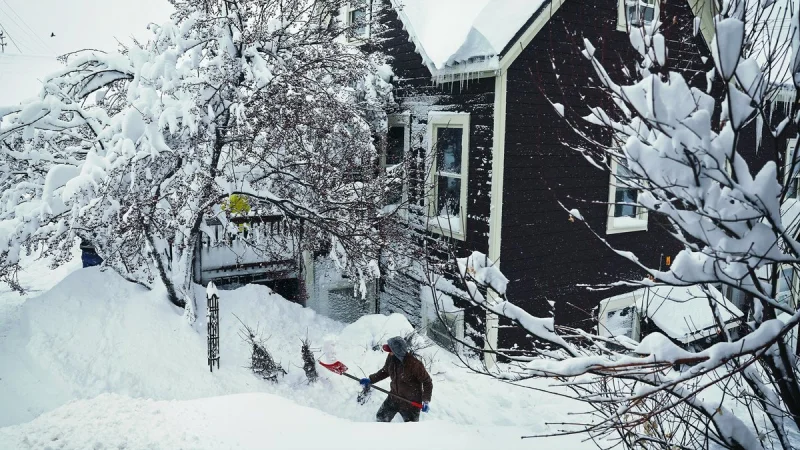
The heaviest snowfall is expected from central New England through the Appalachians, across the Intermountain region and the Pacific Northwest, and into Alaska. In the southern portion of the Northeast, above-normal snowfall is forecast in mid- and late December, mid-January and early and late March. Northern Appalachian residents, especially in higher elevations, are expected to see significant accumulation in mid-January and throughout February. Intermountain homeowners are being warned to expect their snowiest stretches in late November, late December and early February, while the Pacific Northwest is set for heavy snow events in late December, mid-January and mid-February. Mountain properties in the Pacific Southwest are also expected to pick up robust snowfall after the start of the new year.

The snow pattern is not being driven by one clean setup. Some of the activity will be influenced by the Super El Niño giving way into a more active La Niña season, which helps explain why the forecast splits the country into winners and holdouts rather than treating winter as a single national event. Alaska is set apart again, with above-average snowfall through an extended season and peak accumulation in mid-November, early and late January, mid-February and late March. Homeowners in Hawaii are on the other side of the map entirely, with below-normal temperatures expected all winter and the coolest periods in early-to-mid November, early December, late January into early February and early March.
The friction in the forecast is plain: milder winter conditions are still expected across most of the country, yet the coldest stretches are forecast to run from central New England southward through the Appalachians and into the Ohio Valley. The southern Northeast and the Appalachian region should see the sharpest cold in mid-January through mid- to late February, and Ohio Valley homeowners are expected to feel back-to-back freezes in mid- and late January. That is the story of this winter forecast in one line — a warmer season for many, but not a gentle one everywhere. For readers comparing regional outlooks, the Almanac’s separate winter weather forecast summary on sharp U.S. contrasts is available at Farmers’ Almanac Winter Weather Forecast flags sharp U.S. winter contrasts.
What matters next is not the label on the season but the timing inside it. If the forecast holds, the first heavy snow periods will begin before winter is fully underway in some places and keep coming in waves through March in others, leaving homeowners to plan for a season that changes sharply by region and by month.