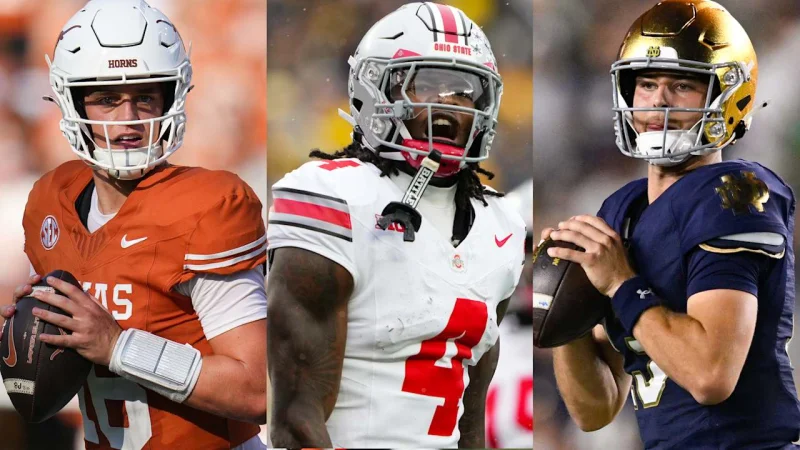
NFL.com has pushed Josh Hoover into the early conversation for the 2026 Heisman Trophy, putting the quarterback on a watch list that arrives just as the season is about to start. Bucky Brooks, a former NFL player and scout, put the list together, and he did it with Week 0 already on the calendar and a full slate waiting next week.
That timing matters because the race for the Heisman usually takes shape long before voters cast a ballot. Brooks is clearly leaning toward the kind of player who can control a season from snap to snap, and Hoover is now part of that field, even before the first meaningful results of fall football are in.
The names on the list tell the same story. Brooks centered his discussion on quarterbacks and other high-end offensive threats, the sort of players whose numbers and stage value can keep them in the spotlight for months. He pointed to Arch Manning as a 6-foot-4, 222-pound signal-caller, noted that he transferred to Auburn, and framed him as Peyton and Eli's nephew. He also highlighted Cam Coleman as an NFL WR1 prospect, a reminder that the Heisman can still reach beyond quarterbacks when the production is loud enough.
Brooks backed that approach with examples from past seasons and past families. Peyton was the Heisman runner-up in his final season at Tennessee, Eli finished third as a senior at Mississippi, and Archie had a pair of top-five finishes during his time at Ole Miss. That history helps explain why familiar offensive names keep surfacing in preseason award talk, especially when teams such as Notre Dame and Texas are expected to stay in the mix for the College Football Playoff.
There is also a built-in contradiction in the way these lists are judged. Quarterbacks are favored for good reason because they touch the ball on every possession and can drive wins, but Brooks also flagged Smith, a pass catcher, as part of the discussion even though that path is far less common for a Heisman winner. Smith’s numbers make the case in a way that numbers usually do: 1,315 yards and 15 touchdowns in 2024, then 1,243 yards and 12 touchdowns in 2025.
Moore's case is more conventional and more demanding at the same time. He posted 3,565 passing yards and 30 touchdowns in 2025, but Brooks said he still has to cut down on turnovers after a disappointing showing in the College Football Playoff semifinal loss to eventual champion Indiana. That is the burden of any early Heisman candidate: the production has to keep matching the spotlight once the games begin to count.
For Hoover, the list is only a start, but it is the kind of start that can shape the whole fall. With eight Week 0 games set for Saturday and a full slate next week, the first answers will come quickly, and the Heisman race Brooks mapped out will move from paper to the field almost immediately.