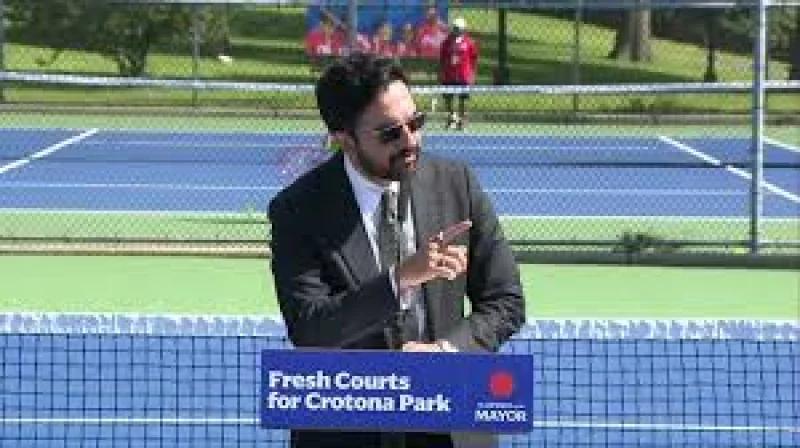
New York City Mayor Zohran Mamdani stood by his plan to raise $500 million a year from a second-home luxury tax on Wednesday, even after a reporter questioned whether the number of properties it would touch had been wildly overestimated. The exchange put a sharper focus on how much money the proposal can actually deliver if its reach is smaller than expected.
The question came at a moment when the tax was already being watched for a simple reason: the revenue target is large, and the size of the property pool matters. If fewer homes are covered, the math gets tighter fast, which is why the estimate of affected properties became the first thing under pressure.

For Mamdani, the answer was to stay with the target rather than revise it. He did not signal that the $500 million figure was changing, even as the scope of the tax was being challenged in public. That leaves the policy hinging on a number that still has not been matched to a clearly stated count of properties.
That gap is the story now. The question is no longer whether the tax is intended to generate major revenue, but whether the number attached to it can survive scrutiny if the base of affected properties is much smaller than first assumed. Wednesday’s challenge makes the policy look less like a finished plan than a test of whether the promised yield holds up under the count.
What happens next is the part that matters for readers: either the estimate of affected properties gets clarified, or the revenue target remains a political promise waiting for proof. For now, Mamdani is keeping the $500 million figure in place, and the uncertainty sits with the size of the tax’s reach.