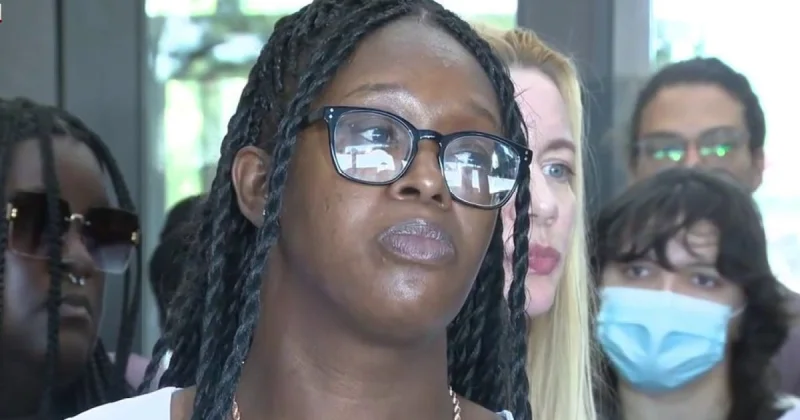
Keshia Golden pleaded guilty Monday to involuntary manslaughter in the 2022 stabbing death of Calvin Sidney, ending a case that had been headed for a bench trial the same day and sending her home on two years of probation instead of prison time.
The plea marked a major turn in a case that had carried a first-degree murder charge for nearly four years and could have exposed Golden to a far harsher sentence. Her lawyers said she accepted probation so she could raise her daughter and watch her grow up, a choice they called practical but not fair.
Golden was eight months pregnant when Sidney was stabbed after the couple’s baby shower in October 2022. Prosecutors said the two were arguing in the early morning hours of Oct. 23, 2022, when Sidney grabbed Golden and pushed her onto a counter, then family members separated them before he went into a bedroom to lie down.

From there, the case split sharply on what happened next. Prosecutors said Golden followed Sidney with a knife and stabbed him in the leg, striking his femoral artery. Her attorneys said Sidney repeatedly slammed her head against the countertop before she grabbed the knife in self-defense to protect herself and their unborn child.
The facts around the case have made it a focal point for domestic violence advocates, especially because police said more than 50 domestic violence calls had been made from the couple’s home. Golden had also obtained an order of protection against Sidney in July 2022 after alleging he punched her in the face.
Golden had been jailed on a $2 million bond before a judge reduced it to $50,000, and community groups helped post the required $5,000 so she could leave jail. By Monday, the case had reached a deal that avoided trial and removed the risk of decades behind bars, but it did not settle the larger dispute over whether she was a defendant who committed a crime or a survivor who fought back.
Her lawyers said the State’s Attorney’s office never had enough to prove first-degree murder, and they urged Cook County State's Attorney Eileen O'Neill Burke to keep criminalized survivors in mind. The plea resolves the criminal case, but the deeper argument over self-defense and prosecution of domestic violence survivors is the part that still lingers.