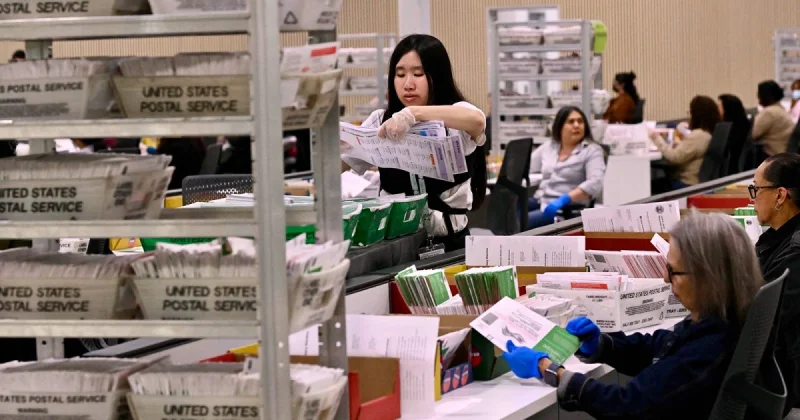
The US Postal Service posted a final rule on Friday that voting rights groups say would impose new mail ballot requirements for the midterms, and a federal judge moved quickly to force the government to explain itself before the rule’s planned Wednesday publication.
U.S. District Judge Indira Talwani ordered the administration to respond by 8 a.m. ET on Tuesday after the League of Women Voters and other groups told her the Postal Service had flouted her injunction. They said the rule, if allowed to take effect, would reach the November elections and add new requirements for mailed ballots even though Talwani had already blocked restrictions tied to Donald Trump’s executive order.
The dispute is landing now because the Postal Service’s timing left almost no room before the rule was set for publication on Wednesday. In her earlier ruling, Talwani said protecting the right to vote “heavily outweighs” the executive’s effort to insert itself into election regulation, and she warned that the order was already causing confusion, increasing chaos and eroding trust in democracy.
The groups argued the government could have complied with the injunction by making clear the final rule would not take effect until after the midterms. Instead, they said, issuing it with immediate effect would sow confusion among election officials and the public, undermine voter confidence and disrupt election administration. That is the practical fight at the center of the case: whether a rule can be published now even though court orders tied to it are still in force.
The administration pushed back in a Sunday filing, saying a two-business-day deadline was too short and that the final rule would apply to the midterms only if the government wins relief from all outstanding court orders. Those orders include Talwani’s injunctions in this case and a separate matter pending before the Supreme Court, where the plaintiffs are 23 states and the District of Columbia. For now, the rule sits in the gap between a Friday filing and a Tuesday court response, with the next move likely to decide whether it ever reaches the November elections.