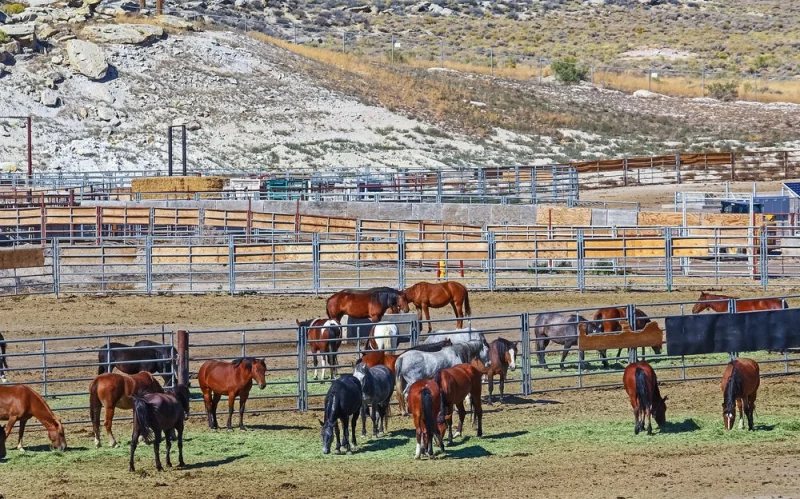
released an investigation this week that found some wild horses sold by the Bureau of Land Management later moved through livestock dealers and toward slaughter. Many of the horses were sold for $25 each, even as the agency has insisted it does not sell or send feral horses to slaughter.
That finding lands at a moment when the debate over wild horses has sharpened again across Western public lands. The horses are part of the American West image, but they also compete for limited forage and water with elk, deer, pronghorn, cattle and other animals. The Bureau of Land Management says wild horse and burro populations substantially exceed what it considers appropriate management levels, which is the agency’s way of saying the numbers on the range are higher than the land can sustain.
The scale of the pressure is easiest to see in the numbers. Oregon State University Extension estimates that a mature horse is 1.25 animal units and consumes about 988 pounds of forage per month, while a cow with a calf is 1.0 animal unit and consumes approximately 790 pounds. In practical terms, one mature horse can eat about 25 percent more forage than a cow-calf pair. That matters because Western rangelands do not have unlimited grass or water, and every additional animal changes the balance.

The problem is not confined to federal horse corrals or sales lots. On Wyoming’s Wind River Reservation, an aerial survey estimated between 9,000 and 10,000 feral horses in 2022. More than 6,500 horses were removed in 2023, and another 1,057 were removed in 2024, after a tribal management plan called for fewer than 500 feral horses. The figures show how far horse numbers can run ahead of what land managers and tribal governments say the range can handle.
That is also why the sales issue matters beyond one investigation. The Bureau of Land Management’s position is straightforward: it says it does not sell or send feral horses to slaughter. But the reported path of some agency-sold horses through livestock dealers leaves a gap between policy and outcome. The reporting does not say how many of the horses sold by the agency ended up at slaughter, and that unanswered number is now the real question hanging over the story.
For tribes facing damage from too many free-roaming horses, the issue is already immediate. The Confederated Tribes of the Warm Springs Reservation in Oregon operates a Horse Herd Reduction Program, part of a broader effort to reduce strain on lands where severe impacts have been described in wildlife habitat, livestock grazing areas and culturally important landscapes. The latest investigation does not resolve the federal sales question, but it makes the stakes harder to ignore: once a horse leaves a government sale, the agency’s assurance about its fate may not be the end of the story.