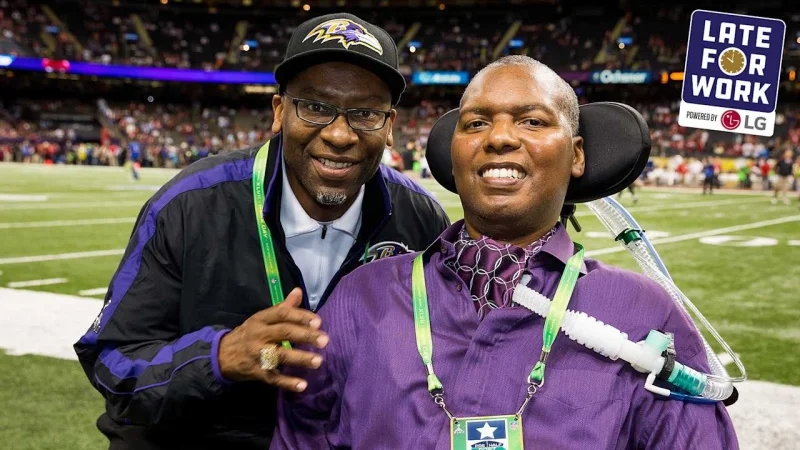
O. J. Brigance died Monday at 56 after a long battle with ALS, closing a life that moved from the NFL to one of the most visible fights for a cure in Baltimore. His death was announced as the Baltimore Ravens began paying tribute to a player who became far more than a former linebacker.
Brigance was the kind of figure fans searched for because his name carried two stories at once: the hard edge of football and the grit of living with a disease that slowly took away his body. He won a Super Bowl title with the Baltimore Ravens and later became known as an ALS activist after his diagnosis in 2007, a turn that made his public life as important as his playing career.
Brigance’s football path ran through the Baltimore Ravens, Miami Dolphins, St. Louis Rams and New England Patriots between 1996 and 2002. He joined the Dolphins as an undrafted free agent in 1996, spent one season with the Ravens in 2000 and played 16 games that year, then moved on to the Rams and Patriots before stepping away from the sport. The Ravens also won Super Bowl XXXV against the New York Giants in 2000, the title that tied Brigance to one of the franchise’s defining seasons.

That football résumé matters, but it is not what made his death land so hard inside Baltimore. Team owner Steve Bisciotti said the organization was devastated by the news and called Brigance a beloved legend, mentor and man whose infectious smile and welcoming nature made it easy to feel a special connection with him. Brian Billick and Kim also said Brigance had been part of the Ravens family for over 25 years and described him as an inspiring symbol of grace, class, compassion and competitive competence.
The friction in Brigance’s story was always in how public his struggle became. He was celebrated for his optimism even as ALS tightened its grip, and after his diagnosis he started a foundation to help ALS research. That work helped lead to the 2016 NCAA Inspiration Award, a recognition reserved for people whose lives and efforts reflect unusual perseverance and impact, which in Brigance’s case came from the way he turned a devastating illness into a continuing cause.
His death now leaves Baltimore with a figure who was both a champion and a witness to the disease he fought in public for years. The Ravens’ tribute has made clear how the organization wants him remembered: not only for what he did on the field, but for the way he carried himself after the field was gone. What remains unanswered is how his ALS foundation will be carried forward now that the man who gave it meaning is gone.