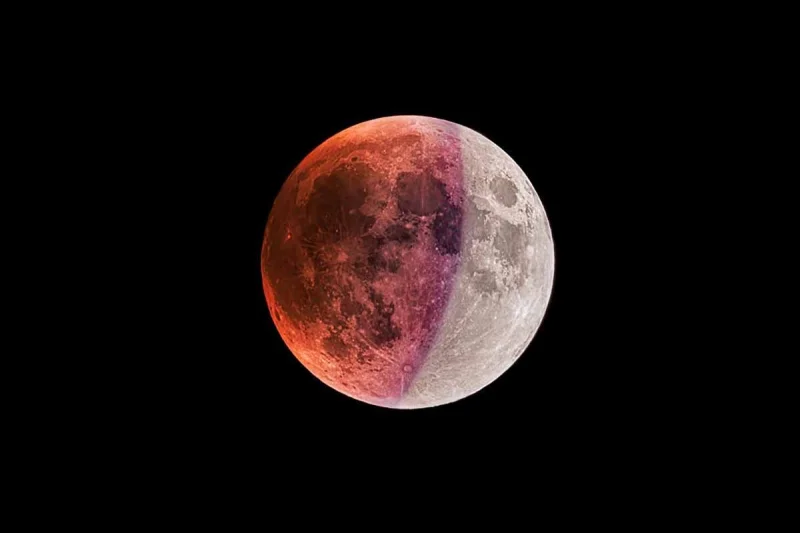
Griffith Observatory is opening its grounds for public viewing and running a live online broadcast for a lunar eclipse that will sweep over L.A. on Thursday night and into the early hours of Friday, August 28. The Moon rises at 7:18 p.m., and the first chance to see it slip deeper into Earth’s shadow begins soon after, with the eclipse reaching its peak at 9:13 p.m.
That timing is why the event is drawing attention now. By peak, 96% of the Moon will be covered, close enough to total that the Moon should take on the coppery red look people expect from a blood moon total lunar eclipse, even though it is still classified as partial. The public viewing begins at 7:25 p.m. and the online broadcast runs from 7:25 p.m. to 12:05 a.m., giving people a window to watch from the Observatory or from home.

The sequence matters for anyone trying to catch it in Los Angeles. The darker umbral phase starts at 7:34 p.m., which means the Moon will already be entering the most dramatic part of the eclipse shortly after moonrise rather than high overhead later in the evening. At 10:52 p.m., the umbral phase ends, while the Observatory grounds stay open until 11 p.m. and the building closes at 10 p.m. For anyone relying on transit, the DASH Observatory/Los Feliz bus will run from the Vermont/Sunset Metro station, with the final bus leaving the Observatory at 11 p.m.
The label creates the only real wrinkle in the story. A total lunar eclipse means the Moon is fully inside Earth’s shadow; this one stops just short of that mark, which is why 96% coverage is still described as partial. But for viewers on the ground, the difference is small enough to be mostly academic. If skies are clear, the eclipse should be visible from anywhere in SoCal, and it can be watched safely with the naked eye, no glasses or telescope required.
For Southern California skywatchers, the night is unusually well-timed and unusually limited. Large crowds, limited parking and heavy traffic are expected around Griffith Observatory, and there is also a show at the Greek Theatre that evening. After this one, California will not see another partial lunar eclipse until January 2028, followed by a partial solar eclipse later that month, another partial solar eclipse in January 2029, a total lunar eclipse on June 26, 2029, and the next total solar eclipse visible from California only on August 12, 2045.