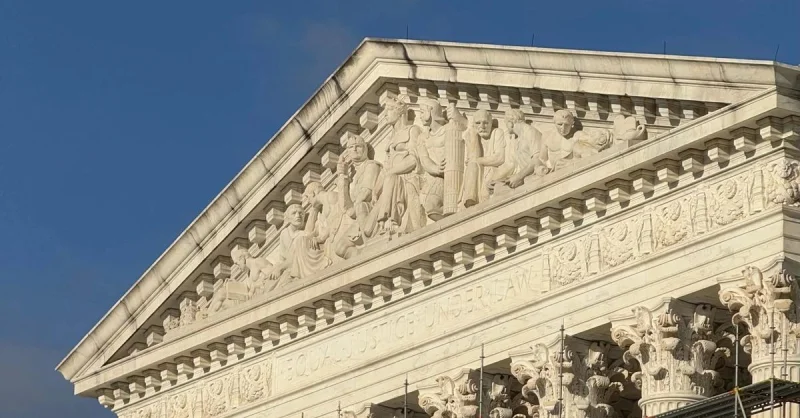
The Trump administration asked the Supreme Court on Friday to pause a lower-court ruling that would halt construction of a new White House ballroom, putting the project before the justices on their emergency docket while the court is in summer recess. The request adds another fast-moving Trump fight to a docket that is already crowded with urgent applications.
The timing matters because the justices are already weighing a separate Trump-related emergency request over mail-in voting. On July 27, the administration asked the court to clear the way for President Donald Trump’s executive order on mail-in voting, and 12 states later echoed that request in their own application. One week after that, 23 states and the District of Columbia asked the court to deny the requests, and last Wednesday the administration pressed the justices to decide promptly.
The ballroom dispute now sits beside that election case as another test of how quickly the court will move when the Trump administration asks for emergency relief. The filing does not identify in the provided record which lower court issued the ruling or spell out its reasoning, but the effect is plain: if left in place, it would stop the White House ballroom project before the construction can continue.

That is where the friction lies. The same court is being asked to manage a construction fight and an election dispute at the same time, while it is already handling other high-stakes Trump litigation on the emergency docket. On Thursday, for example, the en banc 5th Circuit dismissed a separate case after the Trump administration removed all three plaintiffs from the U.S. using alternative legal authorities, and Judge Jennifer Walker Elrod called that development unobjectionable.
The parallel rush to the Supreme Court underscores how much now turns on emergency procedure rather than full briefing. The ballroom request may be decided without a full hearing, and the next move is in the justices’ hands: whether they pause the ruling and let construction continue, or leave the stop order in place while the case works through the lower courts.
Elsewhere in the court’s recent emergency work, the justices have also been dealing with a case tied to the Alien Enemies Act and alleged Tren de Aragua gang members, after the Supreme Court blocked the government from immediately removing them without giving them a chance to challenge the move and sent the case back to the 5th Circuit. Last year, President Donald Trump tried to use that law to deport alleged Venezuelan gang members, and the 5th Circuit later moved to rehear the case before dismissing it when the plaintiffs had already been removed.
The court’s emergency docket has become the place where the biggest Trump disputes now land first. The ballroom case is the latest to arrive there, and the question is not whether the administration has asked for relief. It has. The question is how much the Supreme Court is willing to do, and how fast.