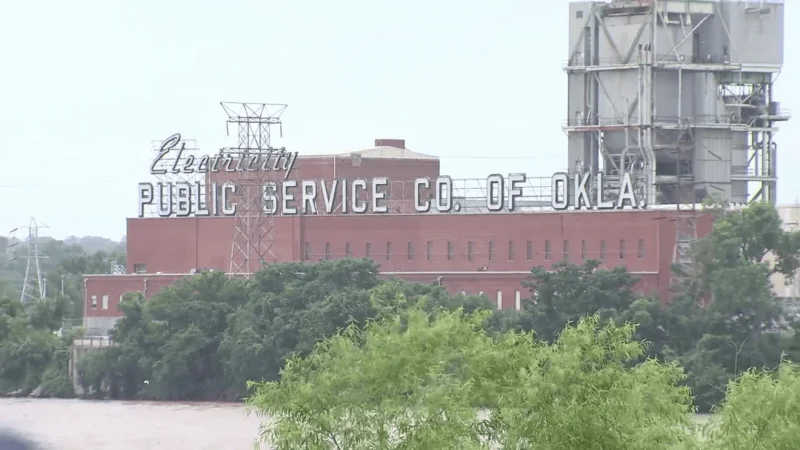
Public Service Company of Oklahoma customers in Tulsa are already paying more on their electric bills after an interim rate adjustment took effect July 1, even as state regulators continue to weigh PSO’s broader case to hike rates permanently.
That is the immediate reason Tulsa Weather is turning into a bill-reading issue for a lot of households this summer. Oklahomans are seeing higher electric charges for more than one reason: some are tied to rate hikes, some to rising regional transmission costs, some to heavier air-conditioning use and some to continued investment in an aging grid. Data centers are part of the broader debate, but they are not the only explanation for what customers are seeing on their statements.
At a town hall Thursday evening at a Tulsa library, Rep. Meloyde Blancett said she has called more than 500 constituents and kept hearing the same concern. “I ask what’s on their mind,” she said, adding that many people told her, “What the hell is going on with electricity rates?” Blancett, who represents House District 78, said the meeting was about “good governance,” not politics.
For Tulsa-area customers, the most immediate change is the PSO interim rate adjustment. That temporary increase can still be refunded later if the Oklahoma Corporation Commission decides the utility was entitled to less. But for now, families are paying the higher amount while the commission reviews PSO’s broader case to hike rates permanently.

The review matters because regulated electric utilities such as PSO and Oklahoma Gas and Electric must file formal rate cases with the Oklahoma Corporation Commission, which examines a utility’s total revenue needs. Those needs include operating expenses for labor and materials, capital investments and profit. In late June, the Oklahoma Attorney General’s Office negotiated a proposed settlement with PSO that would cut the average residential increase from roughly 15% to 1% — about $25 extra per month on average down to about $2.45. That reduction won headlines, but it did not settle the dispute.
AARP said not all interested parties agree with the proposal, and Joy McGill said the lower figure still does not fix the basic problem. “From our perspective, the (average) base increase of $25 was absolutely unacceptable,” she said. That friction matters because the settlement may not pass unchanged, and the commission can approve it, reject it or alter it before any permanent rate change is locked in.
Ellen Lannert, a retiree who attended the town hall, said the bill pressure is already changing how she lives. “This is incredibly frustrating for retirees,” she said. “We do the average, we do everything we can, we do the Power Hours, we keep the temperature at 79. We are beyond knowing what to do.” Her complaint captures why the issue is landing now: the interim increase is already on the bill, summer usage is already high and the permanent case is still moving through the Oklahoma Corporation Commission.
That leaves the answer to Tulsa Weather and the electric-bill squeeze in the same place for now: customers are paying more today because a temporary increase has started, but the final number is still up for review. If regulators side with PSO on less than the company wants, some of the difference could come back later. If they side with the settlement, the increase would be much smaller than first described. Either way, the next move belongs to the Oklahoma Corporation Commission.