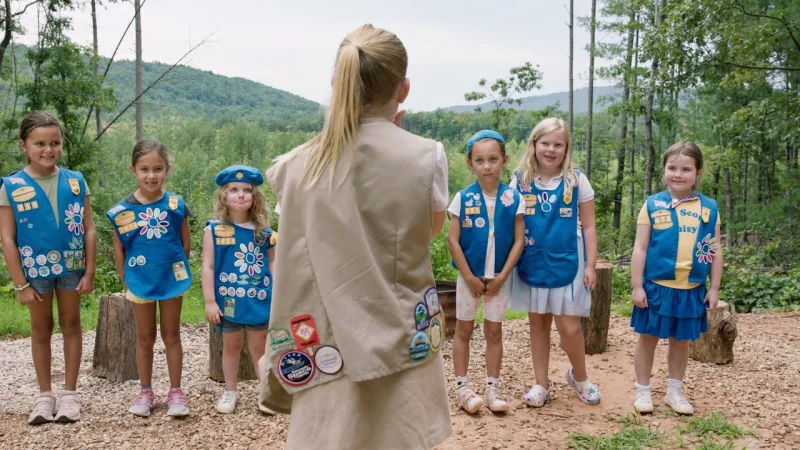
Cookie Queens opened in theaters across the country on Aug. 7, bringing its look at Girl Scout cookie selling from the Sundance Film Festival to a wider audience. The documentary follows girls of varying ages during the organization’s cookie season, when the sales pitch can matter as much as the boxes themselves.
The timing matters because the film pulls a familiar fundraiser into public view just as families and troops are still living it. Girl Scout Cookies generates more than 250 million boxes and about $800 million a year in just six weeks, but the money that reaches troops is far smaller. In Olive G.’s troop, the payout is $1.10 per box, and the amount changes from troop to troop under local Girl Scout Council guidelines.

That gap is part of what gives the documentary its bite. Near Charlotte, North Carolina, Olive, who was the state’s top cookie salesperson at the time of filming, is shown schooling peers on the art of the sale and talking like someone who knows exactly how the system works. She says, “It’s technically child labor,” then adds, “Not forced, we signed up for this.” She also says, “I have always been very aware of political issues,” and, “When you think about Girl Scouts not getting enough money per box, it is a political issue.”
The film also shows how much of the burden can fall on families before a single box moves. Shannon Elizabeth needed to sell 2,750 boxes to attend Girl Scout camp, and her mother said she put down $16,500 for her daughter’s cookie inventory. She described the load as, “I have a mortgage payment in my house right now, of cookies,” and added, “It’s slightly terrifying to know that we are responsible for [selling] them.”
What the documentary leaves hanging is not whether the cookie drive is successful — it plainly is — but who gets to decide what that success is worth. The remaining per-box cost goes to the larger organization’s bakery, staff and facilities, while girls set sales goals for themselves and win ranked prizes each season. Olive is shown pushing for fairer compensation and more say in programming, but the film does not show any outcome. For now, the release has simply made the trade-off harder to ignore.