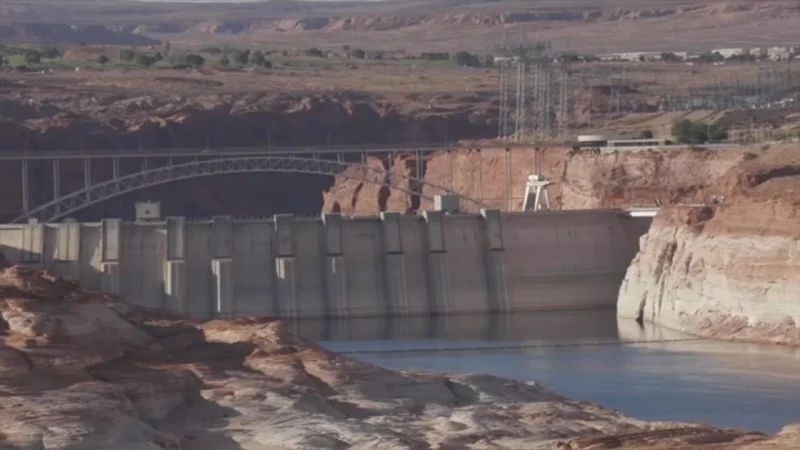
Lake Powell dropped to a record-low pool elevation of 3,519.91 feet on Saturday, a new mark for the country’s second-largest reservoir and a sign that the Colorado River system is still sliding deeper into drought. The reading broke the previous low of 3,519.92 feet set in April 2023.
The number matters because Lake Powell and Lake Mead hold the vast majority of Colorado River water used to keep cities and agriculture going across Southern California, Arizona, Nevada, Mexico and federally recognized tribes, while also feeding hydroelectric power and a steady downstream flow. When one of those reservoirs sets a new low, the strain spreads far beyond the shoreline.
Jack Schmidt said the joint contents of Lake Powell and Lake Mead were last this low in 1957, before Lake Powell even existed. “We are in completely new territory,” he said, adding that the system is facing unprecedented conditions. That is the backdrop for the new record: not a one-off dip, but another step in a long decline that has already rewritten what counts as normal on the Colorado River.

Federal water officials said the daily level reading is provisional and can still be revised, even as the lake is already described as sitting in record-low territory. That leaves open a narrow technical question about whether Saturday’s mark will stand exactly as reported, but it does not change the larger picture. The reservoir has reached depths that were not anticipated as recently as a year ago, and the system is operating with very little room left.
Sharon Megdal called the situation a natural disaster and said it will take multiple years of good winters in terms of precipitation and snowmelt to replenish the lakes’ water supplies. She said one strong year is not enough, even if conditions improve. Schmidt was just as blunt about the outlook, saying the Bureau of Reclamation’s most probable forecast is 75 percent of average inflows into Lake Powell, and that even a year like 2023 would leave the river system in crisis.
That is what makes Saturday’s reading more than a statistic. Lake Powell is not just low; it is testing the limits of a system built on assumptions that no longer hold. If the lake keeps falling, the next question is not whether the West is in drought, but how much more of the river can be squeezed before the record low becomes the new baseline.