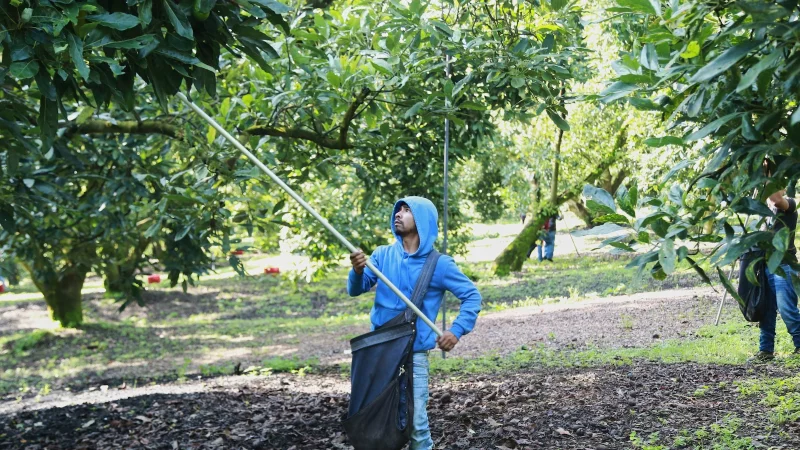
Avocado exports from Michoacán resumed after U.S. authorities fully lifted security restrictions that had shut the trade down for eight days. By the morning after the alert was lifted, Francisco Isidro was back in the groves, filling a box bound for the United States.
The restart mattered because Michoacán, Mexico’s main avocado-producing state, supplies a product that moves fast and in huge volume. In March, Mexico shipped nearly 4,800 tons of avocados a day to the United States, and the pause had left some 200,000 people employed by the industry waiting for work to restart.
For Isidro, 39, the return to the orchards meant wages again after a break that had already stretched through a week of uncertainty. He has spent two decades as a harvester, and when the shutdown ended he said, in effect, that the fruit was moving again and so were the paychecks.

By the weekend, orchards were operating again, packing plants were running at full speed and U.S. Department of Agriculture inspectors had returned to certify avocados before they entered the United States. The inspections are part of the routine that keeps the cross-border trade open, but they also show how quickly that trade can stop when security breaks down.
That fear has not vanished. Valentín Rodríguez, another producer in Michoacán, said the industry could feel safe for a while but did not know what would happen next. Producers welcomed the restart, yet they know the disruption was not an isolated scare: trucks loaded with avocados are sometimes robbed on roads in western Michoacán, farmworkers have been stopped and beaten near the border with Jalisco, and U.S. inspectors have been assaulted and temporarily detained before, setting off similar suspensions.
The bigger uncertainty is the one officials left unanswered. Authorities did not say what triggered the alert, and that silence matters in a state where some growers already treat extortion as a cost of doing business. Rodríguez said he pays 1 peso per kilo exported in extortion fees and ships about 90 metric tons a day, a reminder that the pressure on the industry does not end when the exports restart.