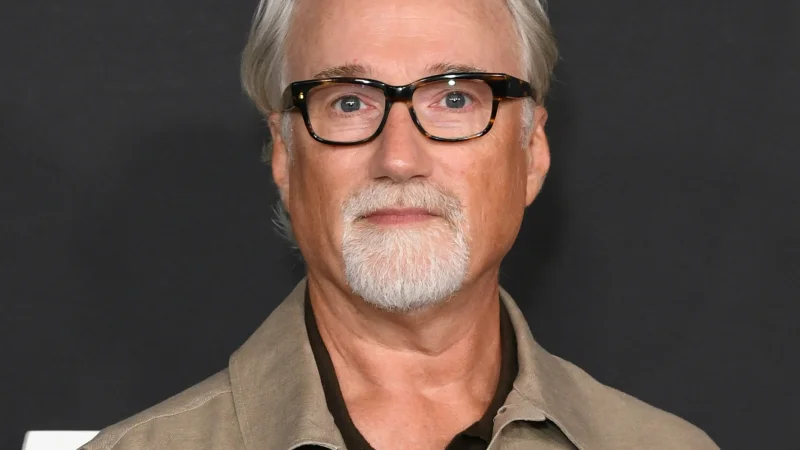
David Fincher said a bruising lesson from Alien 3 still holds: if you believe in something, fight for it, but do it with enough precision that you do not become white noise. The line came in a 2009 interview and has long tracked with the director’s reputation for being exacting on set.
It is showing up now because the quote lands hard in the middle of a career built on control and persistence. Fincher made his breakthrough with Se7en in 1995 and later moved across films such as Fight Club, Zodiac and Gone Girl, but the idea underneath the quote is the same one that has followed him through his work in television and streaming: push, but do not drown out the argument.
The Alien 3 story is where that attitude was forged. Fincher called the production “a baptism by fire” and said the budget kept rising while he was constantly pressing for changes, repeating that scenes needed to be better and that some choices simply did not make sense. In his telling, the job was not to stop arguing, but to argue in a way that could still move the production forward.

That is also where the friction sits. Fincher has said he does not think of himself as difficult, even as the account of Alien 3 makes clear how contentious the process was. He later described the outcome as something he could use to “fail upward,” adding that he figured others had made worse films and still gotten another chance. It is a hard-edged view of survival in a business that often rewards persistence more than comfort.
He took that survival instinct into later work. Fincher pursued Mindhunter to explore criminal psychology and profiling, served as director and executive producer on House of Cards, and co-created Love, Death, & Robots, which won three Primetime Emmy awards for Outstanding Short Form Animated Program. The through line is less about genre than discipline: each project asks for control, and each reward comes after he has fought to keep that control.
The unresolved question is not whether Fincher can be stubborn. It is how often that stubbornness can be turned into the kind of clarity he was describing in 2009, when the fight mattered most because the work was still vulnerable to noise.