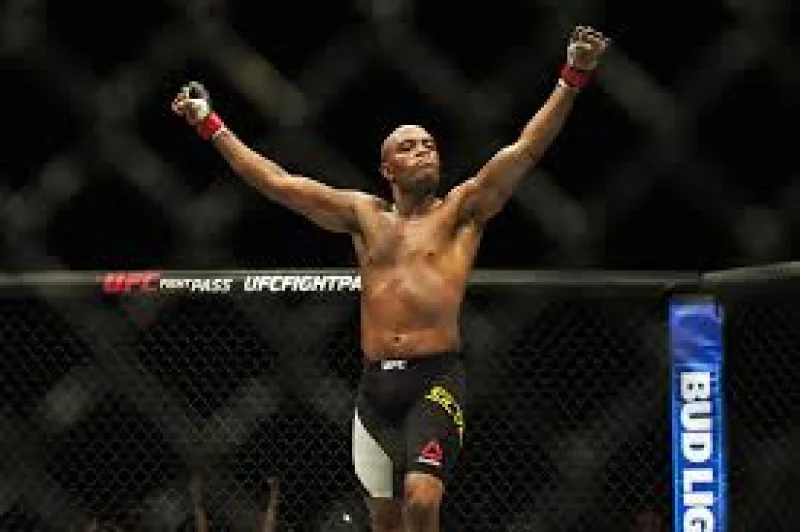
Anderson Silva’s rise as an international name began in 2001, when he beat Hayato Sakurai by unanimous decision to win the Shooto middleweight title. It was the first time anyone had beaten Sakurai, and it gave Silva the kind of win that changes a career from promising to unavoidable.
He had already been fighting professionally since 1997, when Luiz Azeredo handed him his first loss by decision. Silva answered with nine straight wins, six of them by finish, before the Sakurai bout pushed him into a bigger lane. Born in São Paulo and raised in Curitiba, Brazil, he had built himself from the ground up, first in jiu-jitsu as a child and later through Taekwondo and Muay Thai as a teenager, collecting black belts in Brazilian Jiu-Jitsu and Taekwondo, a black Pra Jiad in Muay Thai, and a yellow belt in Capoeira along the way.
That 2001 title mattered because it was the cleanest proof that Silva belonged beyond Brazil. He signed with Pride Fighting Championships in 2002, then kept moving through the sport’s hardest rooms: he finished Alex Stiebling with strikes after taking a cut from a high kick, outpointed Alexander Otsuka, and stopped Carlos Newton with a flying knee. The record was not spotless. He lost to Daiju Takase at Pride 26, then was cut from Pride Fighting Championships after a submission loss to Ryo Chonan. The contrast is part of the story: the same fighter who could look untouchable could also be turned away when the margins went against him.
Silva recovered by winning the Cage Rage middleweight title in September 2004 and then carried that momentum into the UFC in June 2006, where he finished Chris Leben in under a minute. In his second UFC appearance, he battered Rich Franklin’s body with knees and stopped him in the first round at UFC 64 to win the middleweight title. From there, he defended the belt ten times over roughly seven years, beating Franklin again, Dan Henderson, Vitor Belfort, and Chael Sonnen twice, while also knocking out James Irvin and Stephan Bonnar at light heavyweight. His reign ended at UFC 162 in July 2013 against an undefeated but relatively untested Chris Weidman, after Silva dropped his hands and taunted instead of closing the fight. The arc is hard to miss: the 2001 win over Sakurai was the beginning, but the long title run only made that first breakthrough look even bigger.