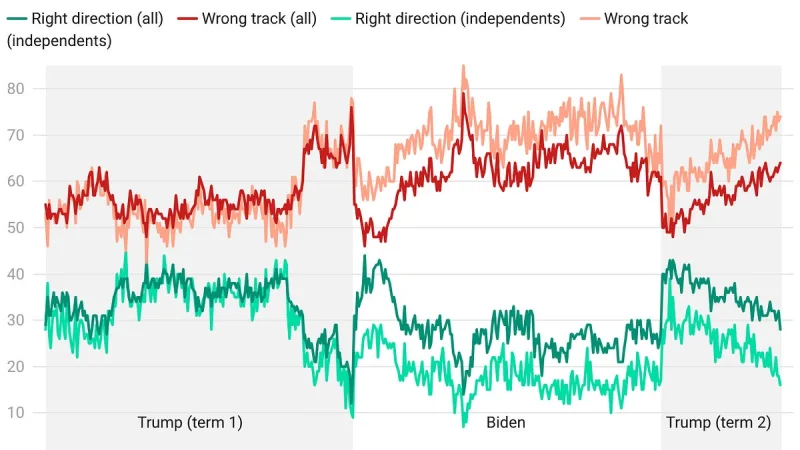
Independent voters are entering the final stretch before the 2026 midterm elections in a sour mood. A fresh polling run shows 74 percent of registered independents say the country is on the wrong track, while 68 percent say the economy is getting worse.
That matters now because the people most likely to decide close races are also the least satisfied with the state of the country. Gallup’s tracker shows the share of Americans who call themselves independent has risen by 10 percent since 2008, and in 2025 a record 45 percent identified that way. Majorities of Gen Z and Millennials now say they are independents, while about a third of Baby Boomers and the Silent Generation do too.
For Alani Bankhead, the Democratic nominee in Montana, that shifting electorate is the kind every campaign studies and none can fully control. Independents are not a small sideshow anymore. They are becoming a larger share of voters while carrying a more negative view of both major parties than partisans do, which makes them more likely to punish than reward whichever side they are looking at.
The latest Marquette Law School poll, conducted from Jul. 22 to 29, 2026, found that just 24 percent of pure independents had a favorable view of the Democratic party and only 15 percent viewed the Republican party favorably. Donald Trump’s favorability was underwater among pure independents by 57 percentage points. The numbers suggest that frustration is not being aimed at one party alone.
That skepticism would be easier to read if independents were closely tuned in to politics, but they are not. A /SSRS poll from May 7 to 31, 2026 found that 14 percent of independents said they did not follow politics at all, compared with 4 percent of Democrats and Republicans. Only 25 percent of independents said they frequently seek out the latest political news, versus 42 percent of Democrats and 39 percent of Republicans. /SSRS also found that 67 percent of independents were registered to vote, while more than 80 percent of partisans were, and that 63 percent of independents were under the age of 50.
That mix is the puzzle for every campaign heading into November: the bloc is larger, younger and more negative, but it is also less reliably engaged. Polling has generally shown independents looking similar to the country in their views during Trump’s first term and before. After Biden’s inauguration in 2021, they started to turn more pessimistic than the overall electorate. They briefly improved their outlook after Trump’s second inauguration, but the latest readings show that lift did not last.
For now, the message is blunt. Independents are no longer behaving like a stable middle that simply waits to be persuaded. They are growing in number, souring on both parties and, if they decide to tune in, could help determine who controls Congress. The unanswered question is not whether they matter in the 2026 midterm elections. It is whether enough of them will show up to make that discontent count.