


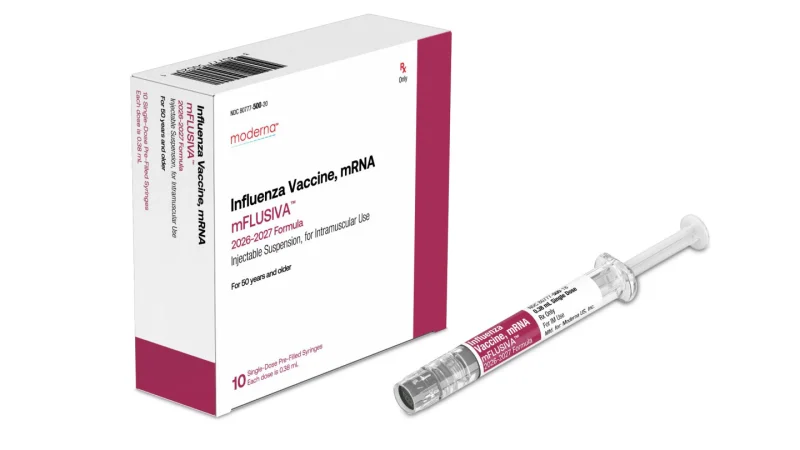
The U.S. Food and Drug Administration on August 5 approved mFlusiva, Moderna’s first influenza vaccine built on the same technology as COVID-19 shots, making it the first FDA-approved mRNA flu vaccine. The shot is cleared for people age 50 and older.
That approval gives the flu vaccine a new place in the fall lineup just as older adults start looking at protection ahead of the upcoming flu season. Moderna said mFlusiva will be available at select drug stores, and the company is positioning it as a faster-moving option than the egg-based shots that have long dominated flu prevention.
The FDA based its decision on a study of 40,000 individuals who received either mFlusiva or a conventional flu shot. In that comparison, the mRNA flu shot group had 27 percent fewer cases. Hanover Matz said the familiar vaccine model is typically generated in chicken eggs and is an inactivated flu vaccine, while an mRNA-based vaccine could cut production time to a couple of months.

That speed matters because flu strains do not sit still. Policymakers have to settle on the most likely strains for the Northern Hemisphere before egg-based production begins, and if the match is off there is no practical way to go back and update the vaccine. Matz said an mRNA platform can be produced much faster and becomes especially useful if the virus changes during the season.
There is still a gap between the study result and the way the shot will perform once it is used more widely. Researchers reported in a June study published in Nature Immunology that the mRNA vaccine produced a stronger and longer-lasting immune response than conventional flu vaccines, with much higher antibody levels one month after vaccination and those levels still present six months later. But the FDA-reviewed data do not say how that advantage will look in a real flu season, where circulating strains and exposure patterns can shift.
Even so, the approval marks a clear shift in how flu vaccines can be made. Influenza kills thousands of people in the United States each year and hospitalizes tens of thousands more, and conventional vaccines are only 40 percent to 60 percent effective depending on the year. Moderna has a faster platform in hand now; what remains open is when eligible adults will actually be able to buy mFlusiva and what they will pay for it.
