


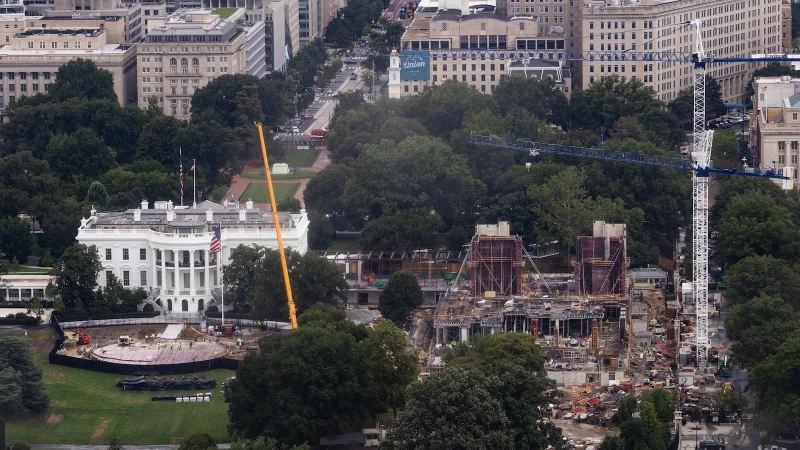
The Trump administration has asked the US supreme court to let construction of a $400m White House ballroom continue after a US court of appeals for the District of Columbia circuit ordered the work halted last week.
That request puts Donald Trump’s White House project back at the center of a legal fight that could decide whether the above-ground ballroom work stops now or goes forward while the case moves through a full appeal.
In its filing, the administration asked the justices to keep the appeals court ruling on hold. It called the ruling an extraordinary and unlawful injunction that would stop what it described as the ongoing construction of an integrated military complex, including a totally secure ballroom space at the East Wing of the White House, which it said is vitally required by national security.

The government said the ballroom is not being treated as a stand-alone addition. It said every part of the project is an integrated whole geared toward remedying security deficiencies and bringing critical improvements to the White House, and that the entire ballroom structure is designed to shield the military installation beneath it.
That argument runs straight into the appeals court’s conclusion last week that the project lacked the necessary approval from US Congress. The ruling blocks above-ground construction of the ballroom, but it would allow work on the underground security structure to continue, a split that leaves the core dispute focused on what kind of approval was required and how far construction can proceed before that question is resolved.
The administration’s lawyer told the court that stalling the vital construction would leave Donald Trump much less safe and ultimately risk future presidents’ safety. That is the bluntest version of the White House argument: the fight is not only about a building, but about whether the project can be paused while the legal system decides if Congress was properly involved.
What happens next is now in the hands of the justices, who must decide whether to leave the appeals court decision in place or put it on hold while the administration prepares a full appeal. The answer will determine whether the ballroom work stops above ground for now or continues under the shadow of a constitutional fight over presidential power and congressional approval.
