


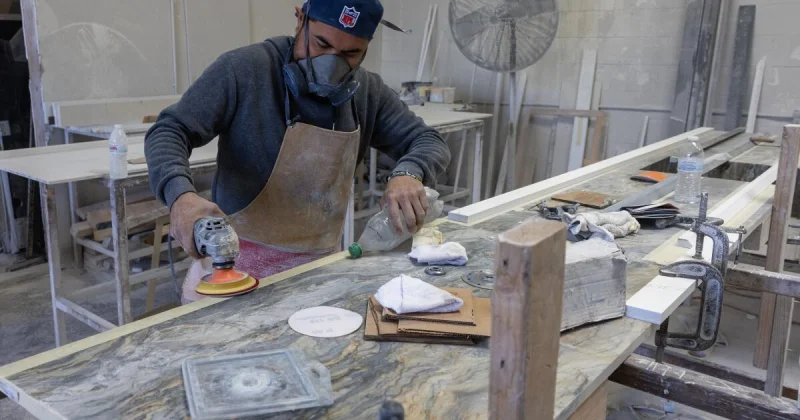
California has reported 571 silicosis cases since 2023 among workers who cut artificial stone countertops, a jump from 47 cases in the previous four years and a rise that now points to a fast-moving occupational disease outbreak. The latest state data show the toll has climbed more than tenfold in less than four years.
The search interest around California Quartz Countertop Silicosis is being driven by how sharply the numbers have changed. Latino men account for about 98% of the reported cases, about half have been in L.A. County, and the work has been centered in the San Fernando Valley, where artificial-stone fabrication has taken root. The California Department of Public Health has also identified 32 workers who died of the disease since 2019, while the median age at diagnosis is 46 and the median age at death is 52.
That concentration matters because the disease is not a scattered risk. It is tied to engineered stone fabrication, where cutting and polishing can release microscopic silica dust. Workers in the state’s records reported 16 to 25 years of exposure on the job, which means the illness often arrives after a long stretch of breathing dust that should have been controlled at the source.

The gap is harder to ignore because the hazard was not new. OSHA issued its silica standard in 2016, when the fabrication of artificial stone countertops was still relatively new, yet the exposures continued. David Michaels, a public health expert, said the product cannot be manufactured safely and economically and warned that the danger has harmed hundreds of workers in California and likely thousands more across the country. He said there was no investigation into those exposures and that the severity of the problem has become clear only in the past decade.
The most troubling part is what the numbers say about how far the disease has already advanced. The state is tracking 72 workers who have undergone lung transplants and 51 who have been referred for transplant evaluations, a sign that many cases are not mild or early. Silicosis is incurable, and while a transplant can extend life, the disease can continue to progress after surgery. Michaels said the illness in these workers is moving faster than silicosis seen in other jobs and is leading to earlier deaths and severe disability.
What remains unresolved is how many workers are already exposed but not yet counted. The reported cases likely include both newly diagnosed workers and older cases that entered the record later, but the state data do not separate those groups. That leaves the official count as a floor, not a ceiling, on California Quartz Countertop Silicosis, and it suggests the next phase will be defined less by surprise than by how much of the hidden burden can still be found before more workers reach transplant lists or die.
