


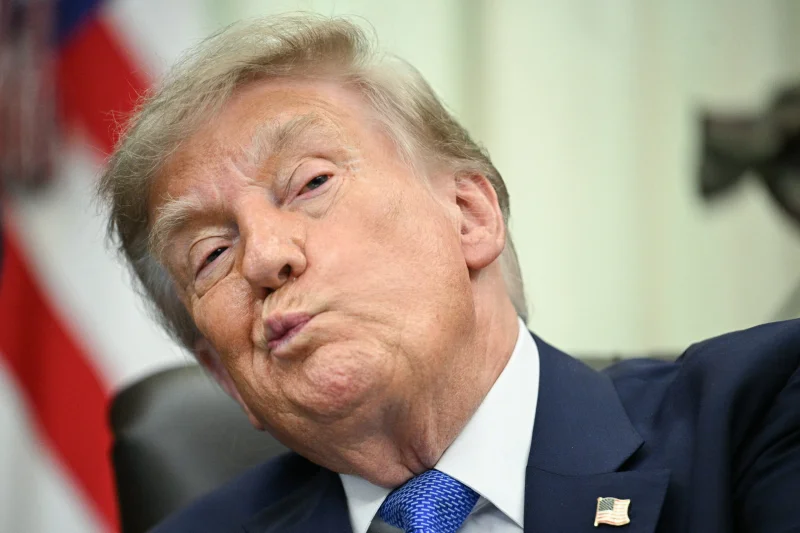
Donald Trump left open the possibility of a national security emergency tied to the November midterms when asked this week whether he would consider declaring one within the next month. Speaking on Real America’s Voice, he said, “Let me just say this, stranger things have happened. I’ll leave it at that,” and Wayne Allyn Root moved on after the exchange.
The remark mattered because it was Trump’s first direct engagement with a specific emergency-declaration push that has been circulating among some of his most vocal supporters. Root had framed the idea as a way to force photo ID, proof of citizenship and tighter limits on mail-in ballots, and when he called it “the SAVE Act on steroids,” Trump replied, “Yep.”
That response landed in the middle of a larger fight over election rules. The US Senate refused to pass the SAVE Act, which would have required prospective voters to show documentary proof of American citizenship in person when registering and present photo ID at the polling booth. Voter ID rules now vary by state, and supporters of the emergency idea say a federal move would override that patchwork.

Trump’s allies have been pushing the argument hard. Steve Bannon and Root have both urged the emergency route in recent months, while Bannon said the evidence from what he described as deep state intelligence agencies set the predicate for Trump to act and predicted a declaration by late August. But the claims that have been used to support the push have drawn scepticism and are widely seen as unsupported, leaving the proposal on shaky ground even as it gains airtime.
The pressure campaign is colliding with a broader White House focus on election integrity and what it calls the weaponisation of government against Trump. Over the past week, that effort has highlighted declassified documents about an FBI criminal probe opened in May 2017, and Trump himself has kept election interference front and center after a prime-time address last month that alleged meddling by China, the harvesting of 220 million Americans’ data and suppression by members of the deep state. That is the backdrop for the current moment: a president who has not said yes, but has not said no either.
Chuck Schumer warned that “Donald Trump wants to take over American elections” and said Senate Democrats are prepared to combat his “unprecedented, illegal efforts at every turn.” For now, Trump has not announced any emergency declaration. His answer leaves the central question unresolved: whether the next move is just another trial balloon or the start of a fight over how elections are run in November.
