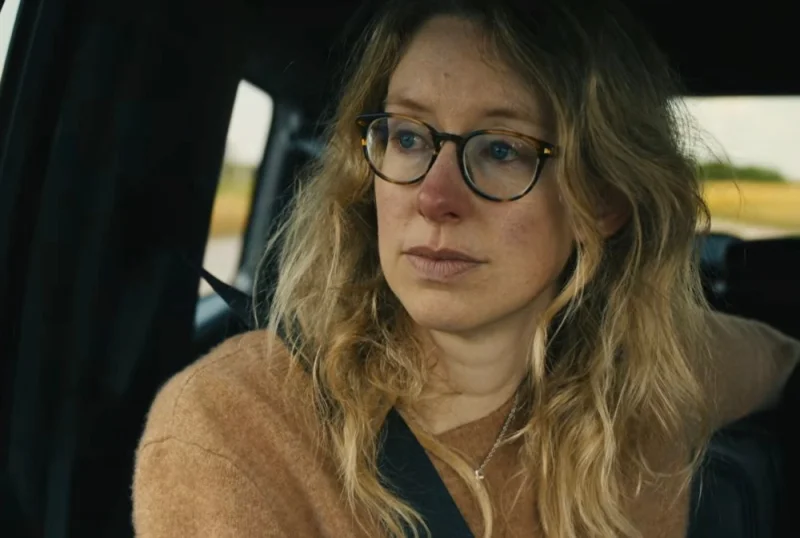
A24 has released a new trailer for the 174-minute Elizabeth Holmes documentary You Can See Everything, setting the stage for an Oct. 16 release after a Telluride Film Festival premiere that left some viewers stunned. The film tracks Holmes in her final days of freedom and the first weeks of imprisonment, turning a notorious downfall into one of the season’s strangest prestige titles.
The trailer arrives because the film is now moving from festival talk to public release, and the curiosity around it is tied to how closely it follows Holmes at the moment her life changed. Thirty-four days before she is sent to prison, she invites a skeptical film crew to document her every move, and the official logline says that intimate access becomes a three-year journey into the abyss.
That access is the mystery at the center of the project. Holmes, identified in the film as the founder of Theranos, is shown speaking directly to the crew and insisting, “I don’t have anything to deceive you on.” She adds, “Of course I’m not deceiving you. I’m engaging with you as a human being. Why would I deceive you? There’s no reason for me to do that.”
The result, by the account of those who saw it first, is less a standard documentary than a controlled collision between subject and filmmakers. The teaser shows Nathan Fielder and Holmes staring intensely into each other’s eyes, and one critic called the film a “one-of-a-kind reality-TV-as-hangout-movie psychodrama circus,” driven by Fielder’s quizzical edge. Another said it keeps growing stranger over its three-year span and ends with a final movement that had seasoned attendees walking out shell-shocked.
That final reaction is what makes the release matter now. You Can See Everything is no ordinary true-crime recap; it is a 174-minute look at Holmes in the days before prison and after imprisonment begins, and its most unsettling promise is that the woman at its center appears willing to sit still for it. The question left hanging is not whether the film will reopen the Theranos story, but how far Holmes was willing to let the camera follow her once the sentence became real.