


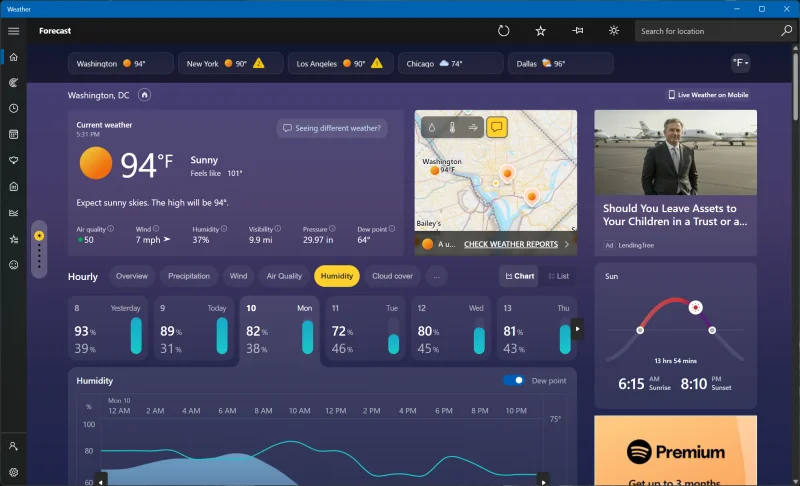
Microsoft’s Weather app on Windows 11 is drawing attention for the wrong reason: it was reported to use more than 1GB of memory, with one check putting the Windows 11 Weather App Ram figure at 1.1GB. On a low-power Chuwi laptop, the app was still sitting on north of 900MB while it was being checked.
That is a heavy load for a tool most people open to glance at the forecast, and it matters today because Windows 11 is officially said to have a 4GB minimum RAM requirement. A built-in app that can take up close to a quarter of that on its own can leave far less room on modest devices, especially when it is opened alongside other tasks.
The numbers were not a one-off snapshot. The memory figure in the test was the average of 3 runs during active use, and the app was said to fluctuate heavily across 9 subprocesses depending on what was being loaded, from where, and whether it was in focus. In other words, the same Weather app can look very different from one moment to the next, which helps explain why some users have seen a viral 1.1GB reading while others have not.

The comparison with Linux weather apps makes the contrast sharper. GNOME Weather did the same job for under a fifth of the reported Windows figure, while Mousam used around a third of Microsoft’s effort. That gap matters because the task itself has not changed: it is still a weather display, not a full desktop suite. On the author’s low-power Intel m3-8100y laptop with 8GB RAM and a 250GB NVMe SSD, the test was aimed at comparing those lighter apps on Ubuntu 26.04 LTS using Resources and Mission Center.
Microsoft’s own design choices help explain part of the load. The company builds many of its apps using WebView2 rather than native WinUI, and WebView2 is powered by Microsoft Edge’s Chromium engine. The desktop Weather app also packs in sponsored content and ads, which adds more moving parts than a plain forecast panel would need. Those extras do not make high memory use inevitable, but they do make it less surprising that the app behaves more like a web surface than a lean native utility.
There is still a catch. Not everyone on Windows 11 is seeing a reading as high as 1.1GB, even if the same app can climb into that range on some systems. That leaves the real question narrower and more practical: whether Microsoft can trim the app enough to stop a weather check from feeling like a memory event on devices that start with very little room to spare.
