


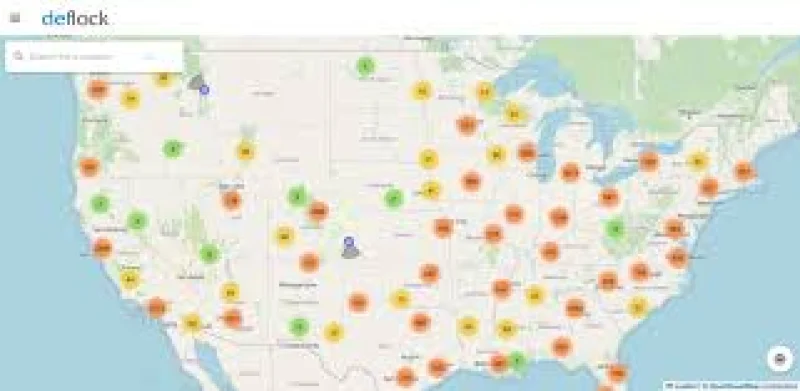
A grassroots backlash against Flock cameras has moved from online organizing to direct sabotage, with one activist saying he has disabled about 30 of the license plate readers near his home in the Minneapolis area. The campaign is colliding with a network that has grown to more than 100,000 cameras across the United States in only a few years.
That scale is why people are searching for Have I Been Flocked? now. Flock cameras are being installed by police departments, homeowners' associations and businesses, and they take still images of vehicles rather than video, capturing make, model, color, license plate data and other details such as bumper stickers. The data can be stored for up to a month and shared with subscribers, sometimes across state lines.

Nomark said he felt “super nervous” the first time he trashed one of the cameras, but added, “I’m not really as scared anymore.” He is part of a Facebook group, DeFlock America, that has more than 600,000 members and has been active online for months, creating crowdsourced maps of cameras and sharing ways to block the lenses.
The fight has sharpened because police say the system helps them solve cases quickly, while opponents say it gives law enforcement an overwhelming look into the private lives of law-abiding Americans and can infringe on privacy and civil liberties. Jon Bridges said his department will query the Flock database for practically any crime that has a connection with a vehicle or a vehicle involved, and said Richmond's police department has used Flock since 2023. In May, police quickly identified a suspect who fled in his pick-up truck during the investigation of a domestic-related double homicide.
What happens next is less clear than the scale of the backlash. The cameras keep spreading, the sabotage is already happening and the dispute is now about whether a surveillance tool built for fast crime-solving will keep expanding faster than the resistance trying to knock it offline.
