


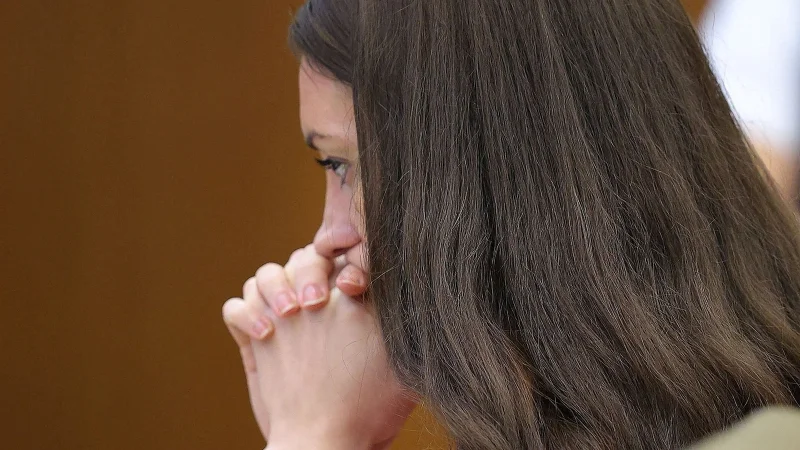
A courtroom dispute erupted Friday in the Clancy Lindsay trial after defense lawyer Kevin Reddington accused prosecutors of saying, “Shut her up,” as Lindsay Clancy was wheeled out sobbing after testimony about her youngest son, Callan.
The Plymouth district attorney’s office pushed back immediately. Beth Stone said the recording captured someone in the courtroom whispering “shut it off,” a remark she said was aimed at one of the monitors as autopsy photos were being shown to jurors.
The moment landed in the middle of a deeply emotional day in a case already marked by the deaths of three children, Cora, Dawson and Callan. Clancy has admitted to strangling them with exercise bands in her Duxbury home on Jan. 24, 2023, but she has pleaded not guilty to three counts of first-degree murder. Her defense says she suffered from postpartum psychosis and lacked criminal responsibility.

Friday’s argument did not come out of nowhere. Judge William F. Sullivan had tried to have Dr. Alia Goodheart retake the stand for cross-examination during the morning session, and Dr. Kimberly Springer had already testified about the autopsy on 8-month-old Callan Clancy. By Thursday night, Clancy could be heard sobbing loudly at the end of Springer’s testimony, and that grief carried into the next day’s proceedings.
Reddington turned the hot-mic moment into an open accusation, but Stone said the court had reviewed the video. “We pulled the video,” she said, insisting the words were not what the defense claimed. Reddington, in one of the day’s sharper exchanges, likened the suggestion to “The Handmaid’s Tale,” saying this was not a place where anyone would tape her mouth shut.
The dispute exposed how quickly a trial built on forensic evidence can swing into a fight over tone, intent and what, exactly, was heard. Jennifer Sprague appeared to turn to Shanan Buckingham and mouth “what?” after the accusation, and Sullivan later told spectators there was to be no inappropriate conduct. He also made clear, “I’m not doing that at all,” when pressed about the courtroom exchange.
What remains unresolved is not whether the recording was real, but who spoke and what was meant. The court has now put the meaning of a few whispered words under the same scrutiny as the autopsy evidence itself, and that is likely to hang over the trial the next time jurors are brought back into the room.
