


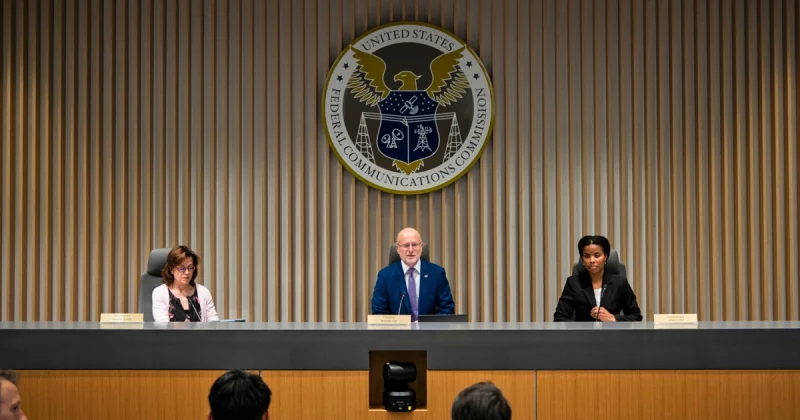
The Federal Communications Commission voted Thursday to eliminate the 39% cap that limited how much of the U.S. television audience one company could reach, replacing the 22-year-old rule with a case-by-case review. The 2-1 vote clears a path for bigger station groups to chase more media consolidation under the new FCC TV cap approach.
The change matters now because it rewrites a rule that had governed broadcast ownership since 2004, when the current 39% limit took effect. Before that, Congress had already lifted an earlier 35% ceiling in the 1990s. This time, the commission said it would no longer draw a hard line and would instead judge future ownership deals one by one, a shift that could change how aggressively large broadcasters can grow.
Brendan Carr, who wrote last month in Breitbart that the ownership limit was outdated, argued the cap no longer restrains national programmers and instead keeps local broadcasters from competing on equal footing. Anna M. Gomez cast the lone Democratic dissent and called the vote unlawful on its face. She said eliminating the cap does not free local broadcasters from economic pressure; it simply changes who is doing the squeezing, because the companies most likely to get larger are national owners of local stations that increasingly decide what airs on them.

The decision gives Nexstar Media Group a clear win at a moment when the company is pushing to get even bigger. Nexstar is the largest owner of local television stations in the country and is seeking to buy Tegna in a $6.2 billion deal. A federal judge put that transaction on hold after eight state attorneys general filed an antitrust lawsuit, and the combined company would reach at least 60% of U.S. households. Carr said in March that Nexstar’s purchase of Tegna had already been exempted from the 39% rule on a standalone basis and said that move was consistent with longstanding FCC authorities.
That history is why the new case-by-case system may matter more than the repeal itself. The commission has removed the bright-line ceiling, but it has not erased the fact that the old rule was backed by federal law, which is why legal pushback is likely. For Nexstar and other top station owners, the immediate pressure is whether the FCC’s new approach will be flexible enough to approve larger combinations without another court fight — or whether the next big deal will end up testing the same limits in a different form.
At the center of that fight is a simple split in how the industry sees the future: Carr says the old cap held local broadcasters back while leaving other media platforms free to grow, while Gomez says the repeal mainly hands more leverage to already powerful national companies that own local stations. The FCC has now sided with the push for scale, but the question it leaves behind is whether that scale can survive in court.
