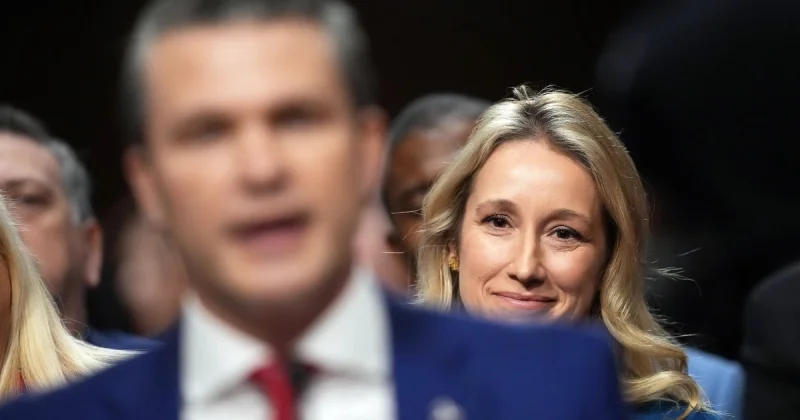
President Donald Trump created a new Presidential Military Spouse Commission on Aug. 3 and chose Jennifer Rauchet to chair it, putting a familiar face from Pete Hegseth's orbit into a public role meant to shape policy for military families.
The commission will recommend ideas on employment, housing, health care, education, child care and other pressures facing spouses who move and adjust around deployments. Trump said he wanted the group to develop practical suggestions to improve military spouses' quality of life.
Rauchet said the panel's members bring decades of experience with frequent moves and deployments, and the reported that more than 20 military spouses will serve on it. That gives the commission a large pool of lived experience, but not a clear answer yet on how it will narrow those voices into recommendations or decide which issue comes first.

The appointment arrives with a shadow attached. During the early months of Hegseth's Pentagon tenure, Rauchet had no formal government position, yet she was reported to have helped coordinate media strategy, met with potential political appointees and advocated for personnel. The Washington Post also reported that she appeared in a Signal chat containing advance information about U.S. strikes in Yemen, while Hegseth said he did not share classified information.
Her presence at meetings with foreign defense officials raised questions as well, even as officials said she left before sensitive discussions began. That history matters because this commission is supposed to be about military spouses, not the informal reach of anyone around the Pentagon, and Rauchet's selection has revived scrutiny of how close she was allowed to sit to official business before taking on a formal title.
Trump has now turned that scrutiny into a test of purpose. The commission is expected to advise on the daily strains military families face, and spouses of previous defense secretaries have used advisory groups to push those concerns. What it produces next will show whether the panel becomes a serious policy channel or whether its first headline remains the one about who was put in charge.