


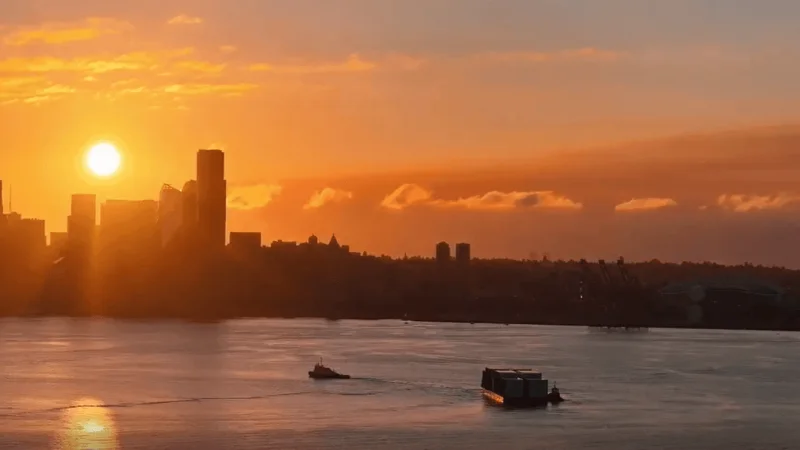
A wildfire smoke alert was issued Monday for most of the Puget Sound region as air quality was expected to slide into unhealthy territory Tuesday. The change was already beginning Monday afternoon, when smoke overhead was expected to mix down to the ground and settle in overnight.
Graeme Carvlin said Monday would likely stay in the range of moderate to unhealthy for sensitive groups, but Tuesday was more likely to be unhealthy for sensitive groups and even unhealthy for everyone. That matters because people searching for Air Quality In Seattle are not looking for a broad wildfire update; they want to know when the air gets worse, and the answer is now, with the sharpest drop expected Tuesday.
The smoke was coming from two directions. Western Washington was being hit by fires in Eastern Washington and British Columbia, and Anna Lindeman said the region was “getting hit from two sides.” She said the highest concentration of wildfire smoke would likely arrive Tuesday and that the pattern would not ease until onshore airflow moved in Friday. In practical terms, that means poor air could hang on through the workweek before there is real relief.
The backdrop is what makes this stretch stand out. Western Washington had been relatively clear so far this summer, even as much of Central and Eastern Washington had already dealt with poor air for weeks. Now the smoke has reached the west side too, just as the region heads into hotter weather, with Seattle expected to top out near 90 degrees Wednesday and Thursday and Olympia forecast in the mid-90s.

The fire driving part of the problem is still growing. The Little Giant Fire had burned about 50,000 acres in the Cascades northwest of Leavenworth, and firefighters were unable to stop it from skipping across mile-wide Lake Chelan in strong wind. The blaze had not been contained, and Beth Friedman said many of the fires in Central and Eastern Washington had grown substantially after extremely critical fire weather over the weekend.
That weekend brought explosive fire growth across the state, including three fast-moving fires in the Spokane area that burned through more than 7,000 acres, destroyed at least 700 structures and forced the evacuation of about 65,000 people. Gov. Bob Ferguson declared a statewide wildfire emergency Saturday after dry winds gusting up to 50 miles per hour fueled the spread. The smoke alert issued Monday is a direct consequence of that surge.
For Dennis Burns, the smoke was already impossible to ignore. He said people from Lake Wenatchee, Plain, Entiat, Lake Chelan and Wenatchee were probably noticing the impact, and he added that ash was falling out of the sky in Plain. That is the kind of detail that turns an air-quality alert into something immediate: not a forecast, but something residents can see and breathe.
The practical question now is how long Seattle can stay in the clear before the haze closes in again. The forecast points to worsening air Monday, the worst smoke Tuesday, heat layered on top Wednesday and Thursday, and the first real improvement only Friday, when onshore airflow is expected to start pushing the smoke out.
