


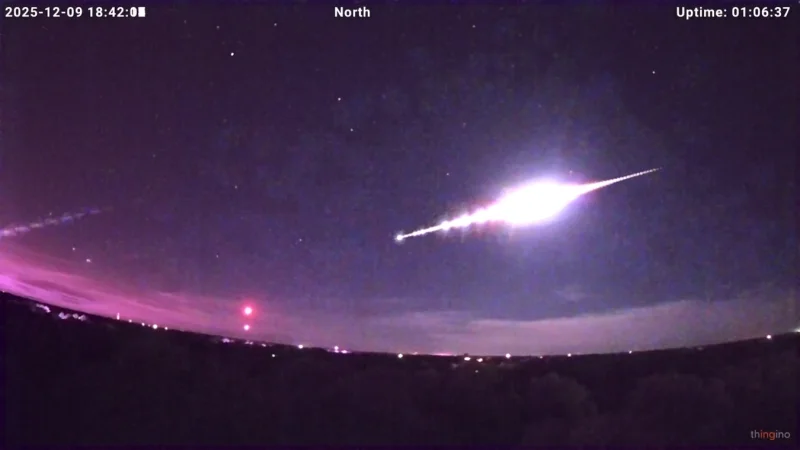
The American Meteor Society says meteor activity will be visible this week, but the best chance to catch it comes this weekend, when the moon sets early enough to open a couple of hours of darker sky. That window is brief, and it matters because the full moon on Wednesday July 29th will keep moonlight in play for most of the rest of the week.
For observers in mid-northern latitudes, evening rates this weekend are around 3 per hour, while tropical southern locations are near 3 as well. By morning, the same outlook rises to about 18 per hour in mid-northern latitudes and about 15 in tropical southern locations, making the pre-dawn hours the stronger bet for meteor showers tonight and into Sunday morning.

Those numbers come from dark-sky sites away from urban light sources, so they are estimates rather than a promise. Anyone watching from urban areas should expect less activity, and moonlight will trim the early and late-night view even where the sky is otherwise clear.
The sharpest reading of the forecast is simple: the week does offer a usable window, but not a generous one. The moon will be full on July 29th, opposite the sun and above the horizon most of the night, which leaves this weekend as the cleaner shot for anyone hoping to see the kappa Cygnids, one of the showers active from July 23-August 27.
The kappa Cygnids reach maximum on August 14th, so this weekend is not their peak. Still, the exact radiant positions and rates listed for Saturday night/Sunday morning, July 25/26, point to a short and specific stretch of better visibility before moonlight once again takes over. For readers looking for meteor showers tonight, the answer is not that the sky will stay dark — it is that the better dark-sky break arrives early, and then disappears quickly.
