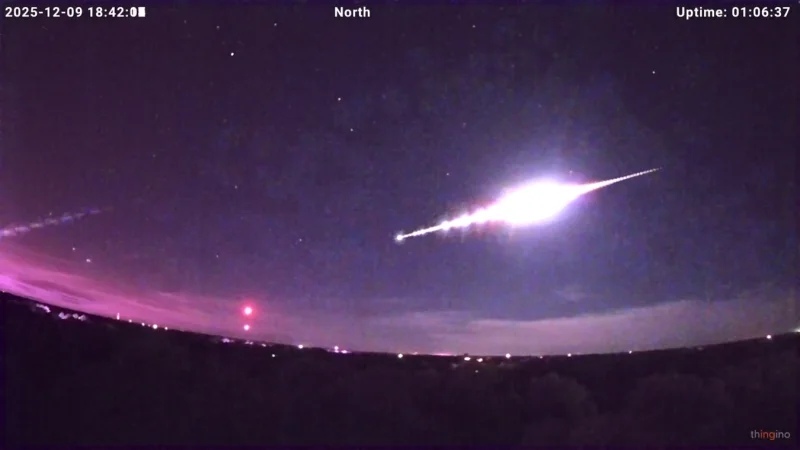
The American Meteor Society’s July 25-31 outlook for the July 2026 Meteor Shower lands on one hard fact first: the moon was full on Wednesday July 29th, and that meant much of the week was washed in moonlight. For people hoping to catch the Southern Delta Aquariids and Alpha Capricornids, the timing mattered more than the calendar.
That is why the search is happening now. The period offered only a couple of hours of dark sky this weekend, even though the moon sat opposite the sun and stayed above the horizon most of the night. By contrast, the moon set early enough to give observers a narrow window before dawn and after moonset, when the brighter activity had a better chance of standing out.

The numbers show why the sky conditions mattered. Evening observers could expect total hourly rates of 3 from mid-northern latitudes at 45°N and near 3 from tropical southern locations at 25°S. Morning observers could see rates near 18 from mid-northern latitudes and near 15 from tropical southern locations. Those rates were estimates based on dark-sky sites away from urban light sources, so anyone watching from an urban area would likely see less activity because only the brighter meteors would remain visible.
That also explains the gap in the outlook: the strongest viewing window was short, and the Moon was still a problem for much of it. Moonlight reduced early morning and evening viewing, so the published rates were not a promise of what every observer would see, only a guide to what the sky could deliver under better conditions. The result was a weekend that rewarded patience and a dark horizon more than luck.
The other shower to watch was the kappa Cygnids, which were active from July 23-August 27 and were expected to reach maximum on August 14th. For this week, the radiant was listed at 18:12, 273, +39, in eastern Hercules, 5 degrees west of Vega, and the guidance was plain: meteors shoot outward from the radiant rather than appearing directly at it. For observers who missed the slim window around the full moon, the next real shift in the sky comes with that August peak.