


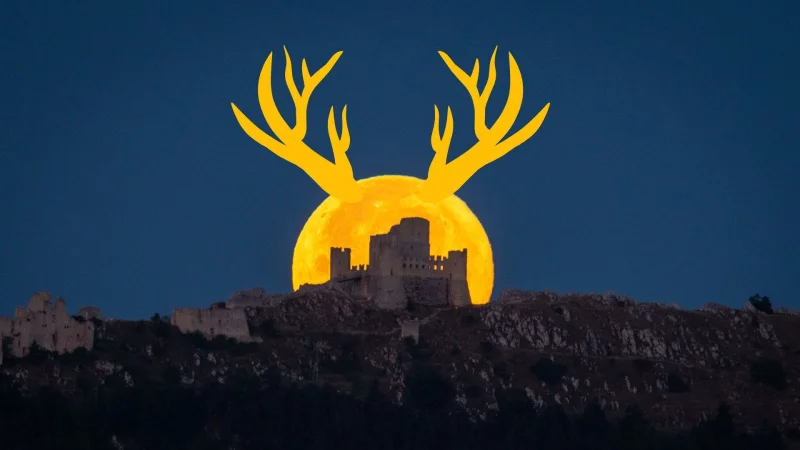
The July full Moon will reach its peak at 15:36 BST on 29 July, but skygazers across the UK will miss the exact moment of maximum fullness because the Moon will be below the horizon. Even so, the Buck Moon will still look full to the naked eye overnight on Wednesday.
That is why interest in the full Moon tonight is building now: the nearly full Moon already lit up the sky on Tuesday 28 July, and Wednesday night offers the best chance to see the next stage. The July full Moon is the second of three full Moons this summer, and it is set to dominate the night sky across the UK while many people are still looking up for a clear view before the month moves on.
For much of England, the view should be favourable. Current forecast models point to very mild weather, light winds and largely clear skies after dark. Across north-west England and Wales, the remnants of a cold weather front might cloud the view, although very little rain is expected and the cloud could break. In Northern Ireland, conditions are expected to be more mixed, with variable cloud, the odd shower and some clear spells. Scotland is likely to see the largest amount of cloud, especially in western areas, though eastern and northern districts should have better luck with clear spells between showers.

The Moon’s timing is the reason the event will not line up neatly with the sky over the UK. The full Moon peaks at a set instant, but a skywatcher can only see it when it is above the horizon, and on this occasion the Moon will be just below it at the exact moment. That leaves viewers with the sight that matters most in practice: a Moon that appears fully lit through Wednesday night, even if the precise peak happens out of view in daylight.
The July full Moon gets its Buck Moon name from the time of year when male deer rapidly grow a new set of antlers. The Royal Observatory in Greenwich also calls it the Thunder Moon, while the Hay Moon is another name used for the same event. Full Moons were given nicknames around the world because they helped people keep track of time and the changing seasons.
There is more to look for after the Buck Moon passes. The Perseid meteor shower is active throughout the rest of July and much of August, keeping the summer sky busy for anyone willing to stay out after dark.
