


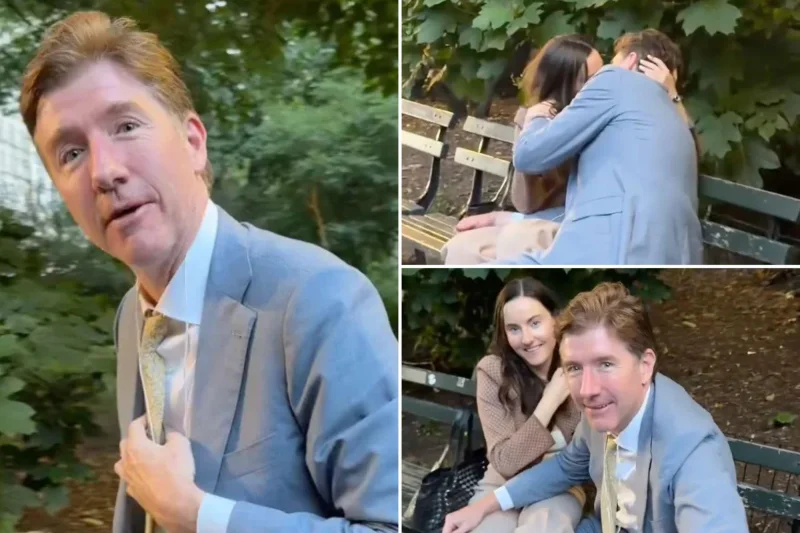
A social media video that began circulating yesterday afternoon showed a couple making out on a public park bench, and the clip quickly turned private behavior into public embarrassment. The original poster shamed the pair with the words “get a room,” while viewers kept picking through the scene for clues about who was in it.
That search is why Nathaniel Cullerton is being read now: the video did not just show a kiss, it showed what many viewers identified as a partner and associate in a setting that made the moment look awkward the second it was posted. The partner sat on the bench while the associate tried to argue with the person filming, which only added to the sense that the encounter had slipped out of their control.
The clip drew attention because it was easy to read and hard to miss. Joe Patrice described it as Biglaw having its Coldplay Kiss-Cam moment, a line that fit the way the video spread online as a public shaming rather than a simple snapshot of two people on a bench. The article frames the episode as a lawyer embarrassment because the people in the video were identified as a partner and associate, not as strangers, and that made the public reaction sharper.

There is, as the piece notes, no reasonable expectation of privacy on a public bench. That is the legal and practical point underneath the mockery: once the pair were in view and the original poster decided to film, the moment became fair game for everyone else watching. The article also says the firm involved would probably care less about the kiss itself than about whether someone might find out they were not billing, which is the kind of detail that turns gossip into workplace theater.
That is where the friction sits. The couple were described as possibly reviewing each other’s work, which is the sort of explanation that can make a public scene sound less scandalous in isolation. But the public setting, the filming, and the decision to post it online made the encounter look compromising anyway, and the associate’s attempt to talk back to the person recording only made the clip feel more exposed.
What happens next is not spelled out, but the damage already is. The video is now part of the record, the names have been guessed at by viewers, and the only thing left unresolved is whether the embarrassment stays as an online joke or becomes a workplace problem once the people behind the bench are identified with certainty.
