


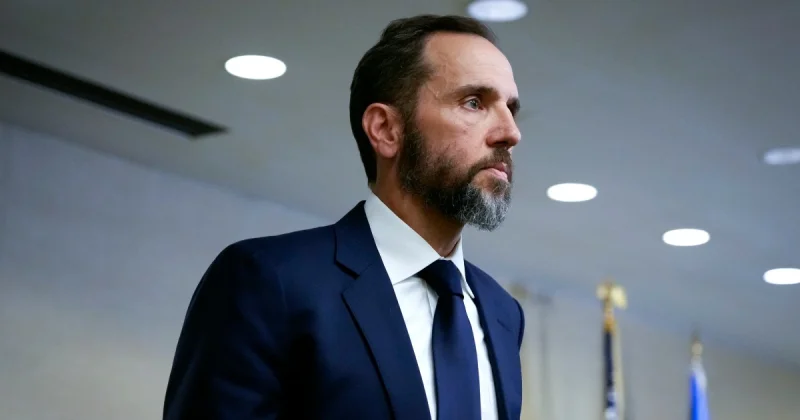
House Judiciary Committee Chairman Jim Jordan on Wednesday night referred Jack Smith to the Justice Department for possible prosecution, saying the former special counsel “seemingly made willfully and intentionally false statements of material fact” during sworn testimony. The referral turns a partisan dispute over deposition answers into a fresh legal test for the department.
The move landed on July 24, 2026, the day CBS News reported that any attempt to prosecute Smith could face an uphill battle. That is because the fight is not over whether lawmakers wanted answers about text messages. It is over what Smith was actually asked under oath, and whether his answers match the questions as written.
Jordan said Smith misled the committee in violation of 18 USC 1001, the federal false-statements law that covers knowingly and willfully making false, fictitious or fraudulent statements to the government. Republicans say Smith failed to disclose that his team obtained access to text messages from 44 members of Congress, most of them Republicans. Smith, however, testified that he did not seek a search warrant to access lawmakers’ text messages and said his team only sought toll records.

Those records are narrower than the material Republicans say they expected. Toll records show data such as the originating phone number, the number called and the date, time and length of a call. They do not contain the content of calls or text messages. Prosecutors on Smith’s team obtained the records after asking the National Archives to turn over cellphone data for White House personnel as part of a separate documents request, but former prosecutors said that point does not rescue Jordan’s case if the question Smith faced was limited to toll records or to a warrant specifically targeting lawmakers’ texts.
That is where the referral runs into its hardest obstacle. Kyle Freeny called the letter “an embarrassment” and said, “This is just a case of a mismatch between what they claim they wanted to know, and what they actually asked.” He added, “If they have bad questions, they do not get the answers that they want.” Gregory Rosen was blunter, saying, “If a witness answers the literal question truthfully, it's not a false statement just because the questioner meant something broader.” He called the referral “legally untenable, if not ridiculous,” and said, “The burden is on the lawyer taking the deposition to ask the right question — not on the witness to guess what wasn't asked and volunteer it.”
The Justice Department is not required to act on congressional criminal referrals, even when they come from House Republicans. It has, at times, opened investigations after referrals from Jordan and others, including one involving CIA Director John Brennan. But this one arrives with a built-in weakness: if Smith was asked only about toll records or a narrow warrant question, the dispute may collapse into a mismatch between what Jordan says Congress wanted to know and what the witness was actually asked. What happens next depends less on the referral itself than on whether the Justice Department decides the record is enough to reopen that fight.
