


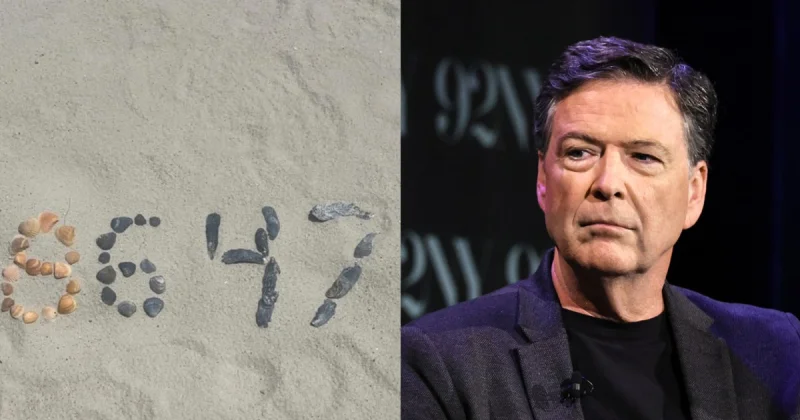
James Comey’s lawyers asked a federal judge on Monday to throw out the case built around his Instagram seashell post, arguing the prosecution turns protected speech into a crime. The former FBI director was indicted in April, and if the case survives the current challenge it is headed toward an October trial.
The post at the center of the case showed seashells arranged as “86 47,” which prosecutors say was a threat against Donald Trump. Comey’s team says that reading fails even basic context: “86” is widely used to mean out of something, Trump is the 47th president, and no reasonable person aware of the circumstances would take the image as a call for violence. His lawyers said a reasonable observer would see political hyperbole, not a true threat.
That argument matters because the judge will have to decide whether the post meets the legal line the Supreme Court has drawn for threats cases. Under that standard, speech is not punishable just because it is offensive or hostile; it must be understood as a true threat, not a political jab or a rough-edged protest message. Comey’s attorneys say the government is trying to criminalize a statement opposing the president, something they called an unconstitutional punishment of free speech.

The filing also leans on a separate ruling in the District of Columbia, where a judge said it was “difficult to fathom how any reasonable observer” would see an “8647” flag flown on National Park Service land as a true threat. During oral arguments in that matter, the government itself conceded there were circumstances where the numbers would not amount to a threat. Comey’s lawyers used that logic to argue the seashell image cannot be treated as criminal simply because prosecutors dislike its message.
The friction in the case is plain. Prosecutors say the seashells were a threat aimed at Trump. Comey’s side says the same image is no more than political rhetoric, and that turning it into a trial would chill debate over politics. Comey has also said the case shows Trump’s “bottomless desire” for revenge, a charge that hangs over the broader fight even as the court is asked to focus on one post and one legal standard.
The next deadline comes Aug. 18, when the Justice Department must respond to the dismissal motions. Comey’s team is also expected to file by Tuesday a separate argument that the prosecution should be thrown out as selective and vindictive. If the judge rejects those bids, the case moves toward October with the same question still at its center: whether a handful of seashells on Instagram is a threat, or protected political speech.
