


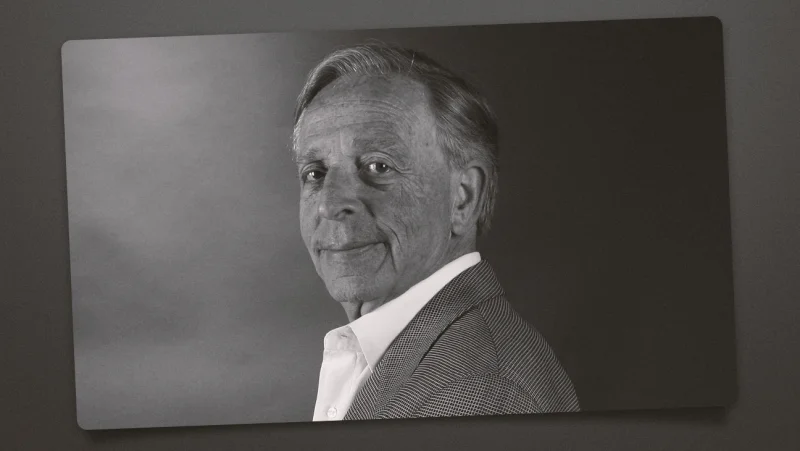
Peter Lassally, the longtime late-night producer known as the “Host Whisperer,” died Sunday of natural causes at a memory care facility in Los Angeles. He was 93.
Tom Lassally said his father’s death closes the life of a behind-the-scenes figure who helped shape some of TV’s most durable talk shows. Lassally worked with Johnny Carson, David Letterman and Craig Ferguson, and the programs he touched helped define the hour when late-night television became a habit for viewers rather than a novelty.
His career reached back before Carson. Lassally had produced programs starring Arthur Godfrey and Mike Wallace before joining Johnny Carson on NBC’s The Tonight Show in 1969, where he stayed until Carson’s final broadcast on May 22, 1992. That span — 23 years on the show — gave him a front-row seat to the period when late-night TV moved from a supporting act to a national ritual.
He then shifted with the format. After one week off, Lassally became an executive producer for Late Night With David Letterman for the NBC program’s final season. When Letterman was passed over for the job of replacing Carson, Lassally did not simply move on. He advised Letterman after Jay Leno was chosen, and he hooked him up with CAA agent Michael Ovitz, helping set up the next phase of Letterman’s career.

That work mattered because it led to the 1993 move to CBS, where Letterman took Late Show With David Letterman from the Ed Sullivan Theater on Broadway at 11:35 p.m. The deal also included ownership of a 12:35 a.m. program called The Late Late Show, and Lassally returned to California to help set it up with Tom Snyder. When Snyder left after four years in March 1999, Lassally stepped aside and Craig Kilborn took over.
That change was not one Lassally embraced. He later made clear he did not want Kilborn in the job and had pushed for Jon Stewart instead, a reminder that his role was never just administrative. He had opinions, and the hosts who worked with him knew where he stood. In a 2009 interview with The Interviews, he said his bond with the people he produced came from honesty: “I always had a good relationship with the hosts that I worked with because I would tell them the truth.”
He kept that approach when Craig Kilborn quit in a salary dispute in 2004, and Lassally got Craig Ferguson for The Late Late Show. The arc of his career runs from Hamburg, Germany, where he was born on Oct. 14, 1932, through the family’s flight from Germany in 1938 and settlement in Amsterdam, where he went to the same grade school as Anne Frank. His father, Paul, worked in coffee importing and exporting, and his mother, Elsa, was a housewife. He later built a television life in New York and California that made him one of the quietest but most consequential figures in late-night TV.
What makes his death resonate now is not just the age — 93 — or the long résumé. It is that the era he helped build still rests on the choices he made, from Carson to Letterman to the shows that followed. With Lassally gone, the sharper question is no longer how he steered late-night television, but how many of its defining turns were shaped by a producer who preferred blunt truth over praise.
