


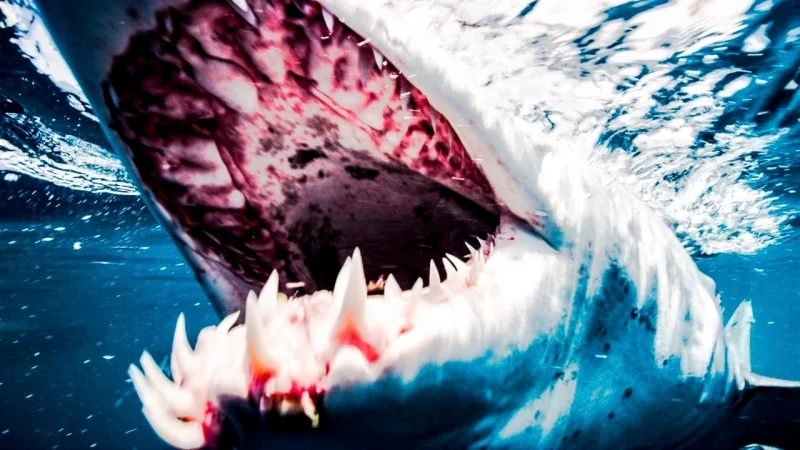
Discovery is putting Craig O'Connell in the middle of one of its sharpest Shark Week setups yet. On July 31 at 9 p.m., “Sharkzilla Takes New York” sends him into Hudson Canyon to look for sharks that have mauled a passing whale or two and occasionally bluefin tuna, and the episode leaves him with the theory that the predator may be radioactive.
The timing matters because Shark Week runs from July 26 to Aug. 1, and this is the night Discovery is betting on a premise that sounds part science, part nightmare. O'Connell has appeared in more than 40 Shark Week programs over the years, so this is not a first-time stunt; it is the work of a familiar field researcher who keeps returning to the same waters with a new question.
That question is rooted in a hard piece of history. The U.S. government dropped thousands of cement-encased barrels of low-level radioactive waste into Hudson Canyon from 1946 to 1970, and a 1980 Environmental Protection Agency report said such wastes may be hazardous depending on their concentration and their proximity to man or other organisms. Discovery ties that history to the present-day search off Long Island by putting O'Connell in the canyon where those barrels were dumped about 100 nautical miles south of the shore.

What the episode does not deliver is a mutant shark. O'Connell’s theory may be chilling, but the evidence stops short of that movie version of the story. The release builds a radioactive-shark premise around what he is looking for, yet the finding remains a theory, not proof, and that gap is what keeps the segment from slipping into fantasy.
O'Connell’s work here also fits the way he has built his career: by moving between spectacle and conservation. He runs Montauk's O'Seas Conservation Foundation with his wife, Dr. Nicole O'Connell, and in another example of that mix of science and invention, he and his students devised a chumming device called the “blubber blaster” and a papier-mache “dead dolphin” named Hudson. He also says, “what do you do when you don't do shark camp,” a line that captures how often his fieldwork turns into problem-solving on the fly.
That same instinct shows up in his comments about shark protection. He says sharks “require all your focus” and that he is always thinking of the next project that may protect them in a new way. He also says, “One of the coolest things about this job is that it allows you to be creative, and because of that, we just invented a new fishing hook that might be much safer for sharks, and protect wildlife.” He adds that “it’s estimated that one out of three sharks have hooks, or multiple hooks, in their mouth,” and says the hook he has been testing in Montauk for three years deteriorates rapidly without compromising strength.
Discovery is not stopping with Hudson Canyon. O'Connell also has an Aug. 1 episode on thresher sharks off Malapascua Island in the Philippines, extending his Shark Week run from the Atlantic to the other side of the world. But the July 31 installment is the one that gives Shark Week 2026 its most unusual hook: a real place, a real environmental record, and a scientist still trying to prove whether the fear is justified.
