


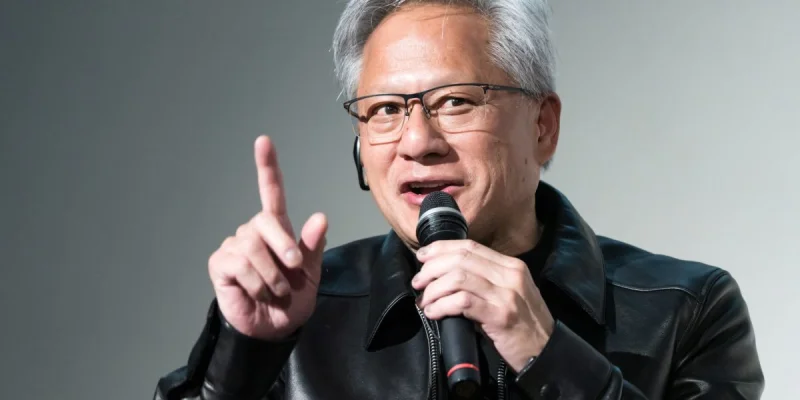
Jensen Huang used his first-ever X post on Friday to throw Nvidia behind a public warning: Washington should not rush to clamp down on open-weight AI models. In the post, Huang shared an open letter signed by about 25 companies and investors and said the world needs both frontier closed models and frontier open models.
The letter makes a clear policy plea. Open-weight systems, it argues, should remain a foundation for American leadership because they spread access to startups and universities, widen competition and let more researchers inspect code, spot weaknesses and patch them. Huang put it bluntly in his post: “Open models strengthen safety and cybersecurity, accelerate innovation and diffusion, and enable sovereignty.”
That message landed while Washington is debating whether to restrict Chinese open-weight models such as Moonshot AI’s Kimi K3, which was released on July 16 and is described as one of the most capable models anywhere. White House adviser Michael Kratsios has accused Moonshot of using distillation to copy a U.S. model to build it, turning a technical dispute into a political one. Distillation, in the letter’s telling, is not theft but a legitimate research method that has long been used to transfer knowledge from one model to another.

The signers are not a fringe group. The letter counts roughly 25 backers and names Nvidia, Microsoft, Palantir, Meta, Hugging Face, Andreessen Horowitz, Perplexity and IBM among them. It also reaches back to the 1980s, warning that open technology should not be restricted so aggressively that the mistake feared with open-source software is repeated. The argument is that open source became the backbone of most of the internet and now underpins systems used by the largest technology companies and by U.S. military and federal agencies.
That broader frame matters because the fight is no longer only about code. It is about who gets to build on it, who gets to inspect it and who gets shut out if policy moves too far toward control. The letter says open models prevent a few firms from dominating the field, while critics of looser rules see national security risks in models that can be copied and adapted more easily. Huang’s decision to speak up on X for the first time puts one of the industry’s most influential executives directly into that collision.
For now, the unresolved question is simple: whether Washington will treat open-weight models as a source of resilience and competition, or as a risk to be narrowed after the fight over Kimi K3. Huang has already staked his position. The policy answer has not arrived yet.
