


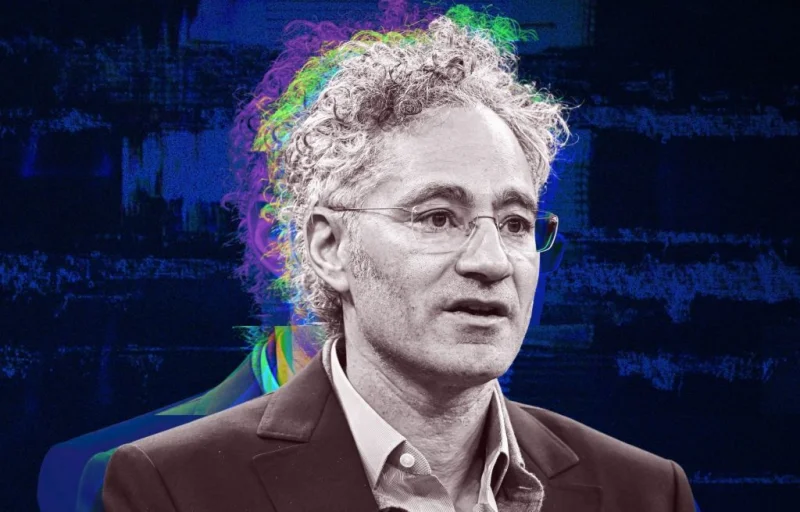
Alex Karp said in July that artificial intelligence could make the people building it vastly richer, while lifting living standards for everyone else. The CEO of Palantir Technologies said the gains could concentrate so sharply that the social fabric starts to tear.
That is why his comments are drawing attention now. Karp was not arguing that AI is a dead end. He called it excruciatingly valuable for humanity, but said its rewards are likely to flow unevenly, with the people involved in AI becoming 10 to 100 times wealthier than they are today.
Speaking on the MD Meets podcast, Karp said he could imagine becoming 20 times wealthier himself. He paired that with a wider warning: the person working out here might see a salary rise of 50% or even double over 10 years, while the technology’s creators capture a windfall that ordinary workers do not. He said that contrast is what makes the boom dangerous, even if the boom itself is real.

The remarks land in the middle of a familiar debate about whether AI will spread prosperity or concentrate it. Karp’s answer was that both can happen at once. He said the technology may raise the average person’s standard of living, but he also said the wealth it produces will be created by people most others cannot relate to, which is why he sees the situation as a problem for society.
He went further, saying that when there is a complete decoupling of unimaginable wealth from normal life, the social fabric tears. He also linked the public’s anxiety to something simpler than economics: the fear of losing a job. In his view, the issue is not whether AI creates value. It is how that value gets divided, and whether the winners are the people building the systems or the people using them.
Karp also tried to separate his warning from any blanket rejection of wealth creation. His broader point was that AI’s long-term effect will depend less on large language models alone and more on practical software that helps organizations deploy the technology effectively. He compared large language models to uranium, a reminder that the raw power of the tool matters less than how it is handled. For Karp, the unresolved question is not whether AI will make money. It is whether the gains will arrive in a form society can absorb.
