


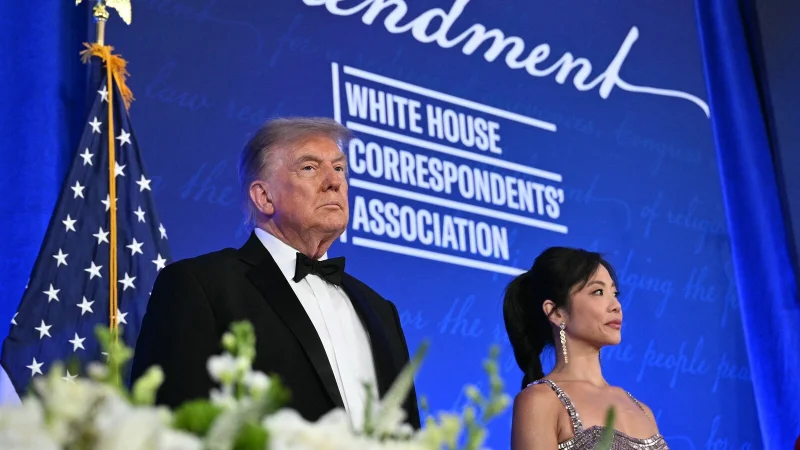
Secret Service officials warned Wednesday that nationwide threats had reached an unprecedented level as the rescheduled White House Correspondents' Dinner approached Friday night. Sean Curran said the agency had opened roughly 10,000 protective intelligence cases since January, a jump of nearly 40% from the same stretch last year.
Curran said the agency had never seen numbers like these in his 24-year career. He also said the Secret Service had carried out nearly 10 times as many mental health-related interventions as it did last year, underscoring how much of the threat picture now runs through online channels rather than handwritten letters or other older forms of contact.

The warning matters now because the dinner is taking place under that pressure, with security already tested before guests even reach the room. At the Washington Hilton, an armed individual was stopped at a screening checkpoint outside the event, a moment Curran pointed to as proof that the perimeter held when it was supposed to.
But that success also reflects the burden built into the system. Curran said the Secret Service expects dangerous people to reach screening locations, and that the agency has to balance standoff distances and other security needs against the disruption that comes from closing streets, hotels and businesses around an event. He said the magnetometers were about 120 yards from the podium, more than a football field away, because the agency has to begin and end its perimeter somewhere.
That is the tradeoff now hanging over Friday night: a protection plan that worked when it mattered, and a threat environment broad enough that officials are treating new reports as credible until investigators decide whether a person has the intent, means and ability to carry out targeted violence. The unanswered question is not whether the system can catch threats at the fence line. It is how often that line will be tested as the night goes on.
