


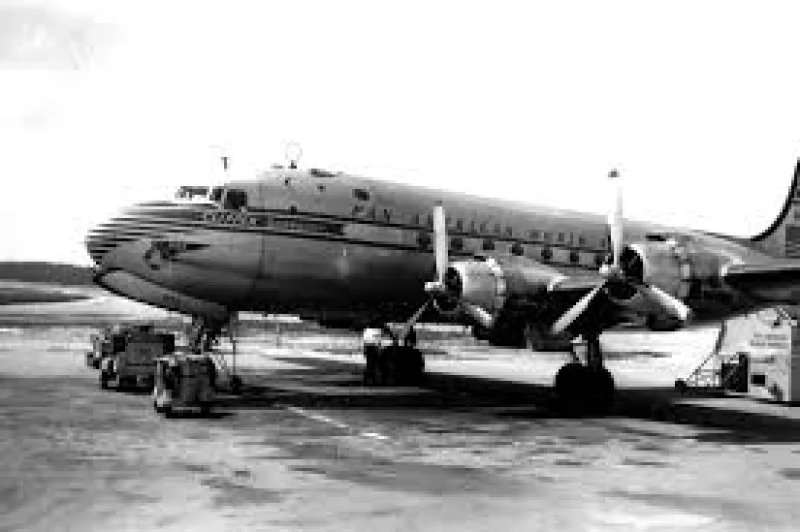
The wreckage of the Pan American Airways Clipper Endeavor has been found 74 years after it plunged into the Atlantic Ocean, giving a long-lost aviation mystery a clear ending off Puerto Rico. The plane was located 2,000ft below sea level, broken into two sections, after a sonar-equipped drone swept the search area on 2 June.
For Russ Matthews, the discovery closed a search that started in 2019, when he read about a luggage tag from the flight that had washed ashore in Florida. He and the team behind the Clipper Endeavor underwater discovery had spent years narrowing the likely resting place to 10 square nautical miles by matching historical records, weather data and a map drawn by air force pilots who witnessed the crash at a public hearing in Puerto Rico.
That work mattered because the Clipper Endeavor was not just another lost aircraft. The Douglas DC-4 had gone down on 11 April 1952 after multiple-engine failure shortly after take-off, carrying 64 passengers and five crew to New York. All 69 people on board survived the impact, but only 17 survived after the plane rapidly sank, and the disaster later helped drive sweeping changes in airline safety, including compulsory pre-flight briefings on every commercial flight.

The expedition was led by the Air/Sea Heritage Foundation in partnership with Discovery Channel's Expedition Unknown and several other organizations. Using an autonomous sonar drone, explorers found the fuselage and tail on the first pass through the search zone. A previous attempt in 2024 was abandoned because the weather was too poor to continue, which meant the search only resumed once conditions allowed the team to work the area with enough precision to make the technology count.
Matthews said he and the others were stunned and elated by the discovery, but also humbled by what happened there so long ago. John Cox said the confusion that followed the crash became a catalyst for modern rules requiring better flotation equipment and preflight briefings on how to use it. Josh Gates put the consequence more bluntly: every time someone steps onto an airplane today, they are safer because of what happened to Clipper Endeavor and her passengers three-quarters of a century ago.
The wreck now gives investigators a rare look at what remains after 74 years underwater, but the bigger story is already fixed. The search is over, the aircraft has been found, and the crash that helped reshape commercial flying can now be studied from the seabed rather than remembered only through records and survivors.
