


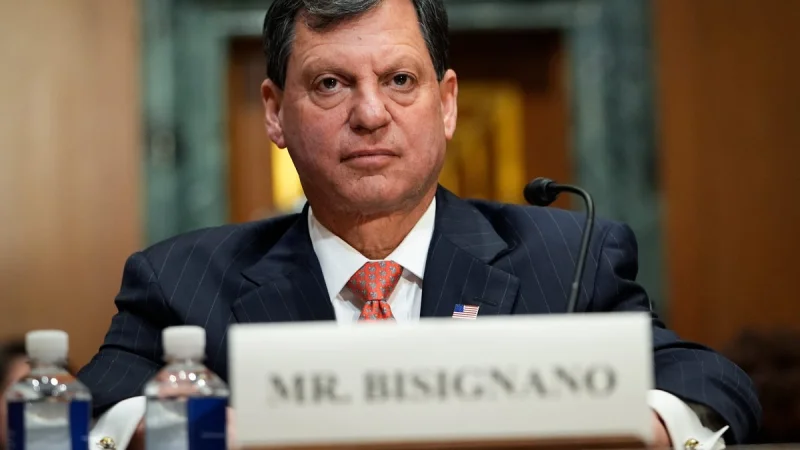
Frank Bisignano is facing fresh scrutiny after a report alleged that he spied on fellow executives while he was co-chief operating officer at JPMorgan Chase. The report said he used his authority to reach sensitive information and internal communications without an apparent business reason.
The timing makes the allegation land harder. Bisignano now leads the Social Security Administration and, in October, was named CEO of the Internal Revenue Service, a job that puts him directly under Treasury Secretary Scott Bessent. That is why a report about his conduct inside JPMorgan Chase has quickly become part of the story around one of the country’s highest-profile federal appointees.
People familiar with the matter said his goal was to keep a tight rein on employees and use the information to undermine rivals as he was expanding his responsibilities. His lawyer rejected that account and said Bisignano never spied on JPMorgan Chase colleagues. The lawyer also said Bisignano left voluntarily to become CEO of First Data, which later merged with Fiserv.

That leaves an unresolved split between a denial and a set of claims that go beyond ordinary workplace monitoring. The report did not describe a business need for the access it alleged, and it tied the behavior to a period when Jamie Dimon had already lost trust in Bisignano and told him around the end of 2012 that he would support him finding work elsewhere. The result is a portrait of a banker whose ascent kept moving even as doubts about his conduct had already surfaced.
Bisignano’s rise has only grown more complicated since then. He became CEO of Fiserv in 2020, left in May 2025 after President Donald Trump appointed him as Social Security commissioner, and between May and August 2025 he and his family netted roughly $560 million from selling Fiserv shares required to be divested under federal ethics rules after his confirmation. Fiserv later reported a big earnings miss, and the company’s stock plunged 44% on Oct. 30. For now, the most important unanswered question is not whether Bisignano is in power — he is — but what evidence the report relied on to make allegations this serious about someone now running two major federal agencies.
Separately, Fiserv’s leadership has kept shifting. Mike Lyons resigned as CEO after around 18 months to become CEO of Truist Financial Corp., Takis Georgakopoulos succeeded him as co-president, and Dhivya Suryadevara resigned from Fiserv in a July 7 filing with the U.S. Securities and Exchange Commission. A White House spokeswoman said Bisignano is a trusted and talented member of the President’s team who is doing an incredible job, but that defense does not answer the central issue raised by the JPMorgan Chase report: whether the conduct alleged then tells readers anything they need to know about the power he holds now.
