


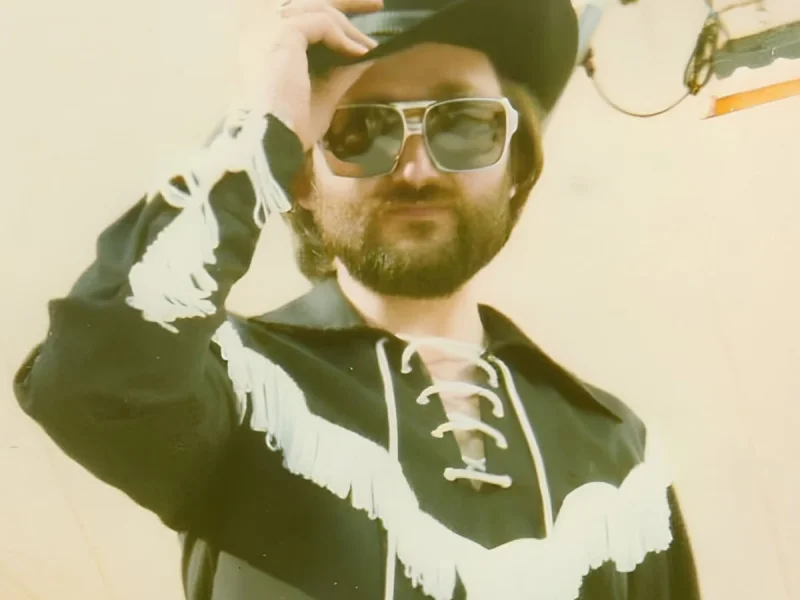
Tony Thorpe, the guitarist with The Rubettes, has died aged 80. His family said the news with a statement that placed him at the centre of a life split between hit records, session work and teaching, and they added: “Our love and thoughts go to his son Clayton.”
His name is being searched now because Thorpe was tied to one of the better-known British glam-rock acts of the 1970s. The Rubettes were formed by Polydor Records in 1974, and their debut single, Sugar Baby Love, went to number one in the UK and reached the top 40 in the United States. The band also put nine top 40 singles into the UK chart, a run that made Thorpe part of a group that kept turning up on radio long after the first hit.

Thorpe’s family described him as “a father to Clay, a husband to Shirle, a friend to many, and a mentor to countless musicians young and old,” and said his “recently failing health did little to diminish his fierce intellect and sharp sense of humour.” Alan Williams also paid tribute online, saying Thorpe’s brilliance “with the axe and the pen” could not be denied and would not be forgotten. Those words matter because they point to a musician who was valued not only for playing guitar, but for writing too.
There is another side to the story that keeps it from being a simple nostalgia note. Thorpe left The Rubettes in 1979 because of creative differences, and he never went back, even though the band remained active. He went on to release solo material, played as a session musician for Cilla Black, Jimmy Tarbuck, Harry Secombe and Roy Castle, and in the 1980s joined the novelty band The Firm. After leaving the music business behind, he moved to Burnley, later retired in Poulton-le-Fylde and taught a music course at Blackburn College.
The family has not said what caused his death, only that he was 80 and that he leaves “an unfillable hole” in the lives of those who knew him or his music. What is left now is the record itself: the hit, the later work, the teaching, and the name of a guitarist whose reach went well beyond the band that made him known.
