


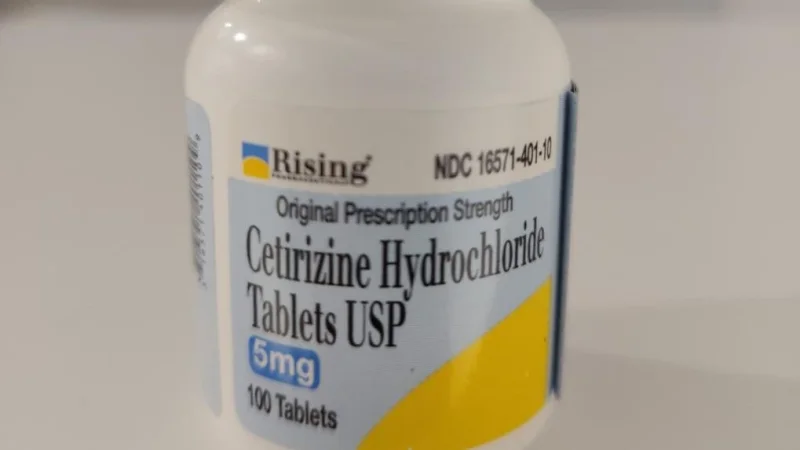
Rising Pharma Holdings Inc. recalled four lots of 5-milligram cetirizine hydrochloride tablets on July 18 after the company said the allergy medicine may have been cross-contaminated with ranitidine. The tablets were sold nationwide in 100-count bottles, and the recall was posted on the Food and Drug Administration’s website.
The product is used to treat seasonal allergies and hives, which is why the recall is landing now for anyone who keeps it on hand for routine symptoms. Rising Pharma said the tablets were distributed nationwide to several wholesalers and stores, putting the notice in front of customers across the USA rather than in one isolated market.
The concern began with a pharmacy technician, who noticed a red dot on some tablets while counting them. That observation led to the recall of four lots of the product made by Unique Pharmaceutical Laboratories and distributed by Rising Pharma. The company said customers with a hypersensitivity to ingredients in ranitidine could face serious adverse events, and that those reactions could include anaphylaxis, difficulty swallowing or loss of consciousness.

That warning matters even though Unique Pharmaceutical Laboratories has not received reports of adverse reactions to the cetirizine hydrochloride tablets. The gap between no reported harm and a risk serious enough to mention anaphylaxis is what gives the recall its urgency. Rising Pharma told customers to contact a physician or healthcare provider if they have had any problems that may be related to taking or using the drug product.
What remains unclear is how many bottles were pulled and which lot numbers were affected, details that were not provided. Rising Pharma said it notified distributors and customers by email on July 18, the same day it issued the recall. Customers who want to report problems can use FDA’s MedWatch Adverse Event Reporting program, and the company can be reached at 1-844-874-7464 between 8 a.m. and 5 p.m. Eastern time, Monday through Friday.
For people who bought the tablets for allergy season, the practical answer is straightforward: check the bottle, stop using it if it appears to match the recalled product, and seek medical advice if there has been any reaction. The broader answer is that a routine allergy drug has been pulled because a small manufacturing clue raised a safety concern that regulators and the company are treating seriously.
