


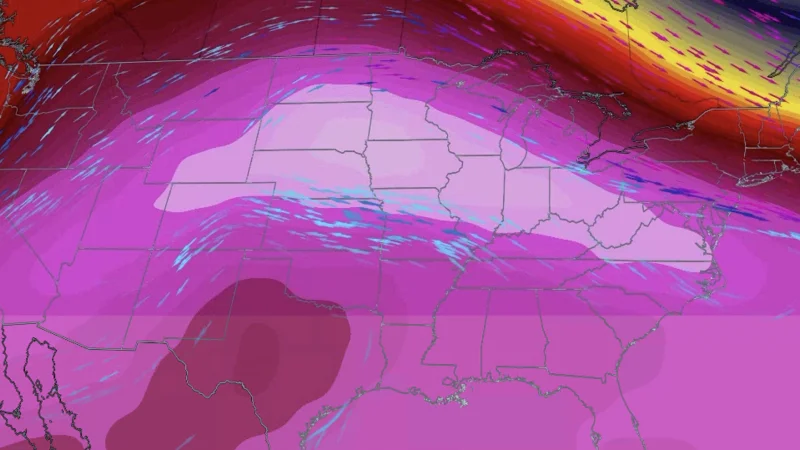
Extreme heat warnings were posted across large swaths of the United States this week as a heat dome locked in record temperatures, unhealthy air and nights that offered little relief. In Billings, Montana, the mercury hit 111F on Sunday, the hottest day in the city's history, while Salt Lake City, Utah reached an all-time high of 109F.
That is why people are searching for Noaa Weather now: the warnings are not just about one blistering afternoon, but about a broad stretch of dangerous conditions moving across state lines. Boston has already seen more 90F days than average, and officials have been warning that the pattern is far bigger than a single city or a single day.
Tyler Hasenstein said people should stay indoors to avoid both smoke and extreme heat, a warning that fits the way this system is hitting the United States from two directions at once. Winds were pushing heavy smoke from more than 100 wildfires in Canada south into the US, and on Wednesday dangerous air warnings stretched from Minnesota into New York City. Toronto had the worst air quality in the world as the smoke thickened overhead.

The heat dome is doing what the name suggests: trapping heat over a region for a prolonged period, suppressing clouds and storms and leaving hot, dry conditions in place. That has helped drive a wildfire season that is already severe. The National Interagency Fire Center says dozens of wildfires are burning in states including California, Oregon, Colorado, Utah, Minnesota and Idaho, and fires this year have already scorched about 3.6m acres.
The hardest part for many people comes after sunset. In parts of the midwest and north-east, the heat has not broken at night, which means bodies do not get the cooling break they need. For older people and others already vulnerable, that combination of daytime heat and warm nights raises the risk of heat illness and cardiovascular strain. It also leaves far north-east Minnesota dealing with a separate emergency, where rangers were trying to warn people that the Boundary Waters Canoe Area Wilderness was closed because about 17 lightning-caused fires were burning around it.
The danger is not only in the air and the temperature. In late June, three firefighters were killed while trying to suppress a blaze along Colorado and Utah's border, and this week a helicopter pilot responding to a fire in Colorado died after the aircraft crashed under circumstances that have not been explained. Those losses show how quickly this fire season can turn deadly when heat, dry vegetation and wind line up.
Cara Schulte described the heat dome as creating the perfect conditions for fire, with hot, dry weather drying out vegetation and making it more flammable. That is the pressure now facing much of the US: warnings are already in place, smoke is moving, and the nights are staying hot. What remains unclear is how long the dome will hold, and how many more places will be forced to stay on alert before it breaks.
