


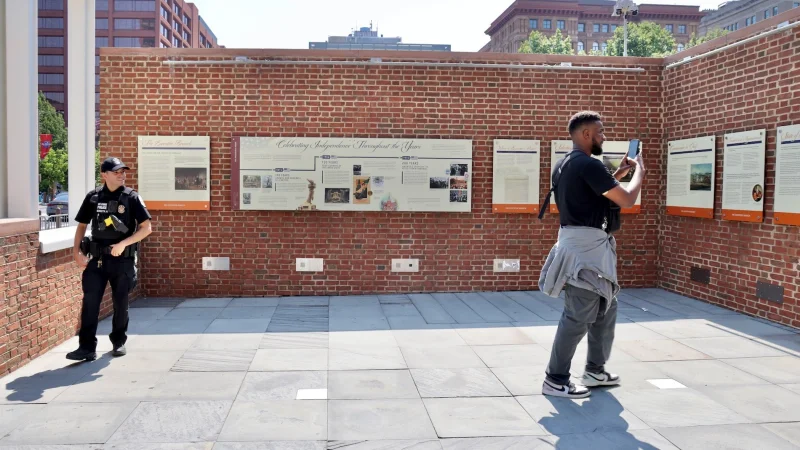
The National Park Service finished its overhaul of the President's House Site on Independence Mall overnight Tuesday, replacing the remaining exhibits with new panels that still mention slavery but give far more room to George Washington’s executive mansion and the early presidency. One of the most pointed panels, “The Dirty Business of Slavery,” is gone, replaced by signage that now reads “Celebrating Independence Throughout the Years.”
The change landed fast and visibly. Visitors arriving after the overnight work found a different story being told at the memorial, one that still acknowledges the nine enslaved people held by George Washington at the site but shifts the emphasis away from them. The new display also says Washington helped draft the Fairfax Resolves at Mount Vernon in 1774, describes the slave trade as “wicked,” “cruel” and “unnatural,” and says he became increasingly committed to the gradual abolition of slavery over time.
It matters because the site is not just a patch of lawn and signage. It sits on Independence Mall in Philadelphia and is meant to interpret one of the country’s most contested founding-era stories: how a president who owned enslaved people is presented at a federally owned memorial. The city had donated the site to the park service nearly two decades ago, but the argument over who gets the final word on the exhibit has never really gone away.
The new panels also make a broader case for Washington’s place in the early republic. They say he signed legislation as president that both upheld and limited slavery, including the Fugitive Slave Act, which passed Congress by a veto-proof majority and allowed slaveholders to recapture people who had escaped while penalizing anyone who helped them. That framing helps explain why the overhaul is being read in Philadelphia not as a routine refresh, but as a deliberate change in emphasis.
The friction is blunt. A federal appeals court concluded that Philadelphia had no legal authority to dictate interpretive content at the federally owned memorial, clearing the way for the replacement. City officials and activists are not accepting the result as final. Mayor Cherelle Parker said the federal government acted “under the cover of darkness,” and Michael Coard, speaking at a quickly organized press conference after the swap, said, “To say that we are outraged is an understatement.”
For now, the new exhibit remains in place, and the fight has moved from the panels themselves to the courts and the politics around them. Philadelphia and activists say they want the original slavery-focused display restored, while the park service has completed the change it was allowed to make. The question now is not whether the memorial has changed. It already has. It is whether the old story can be forced back into place.
