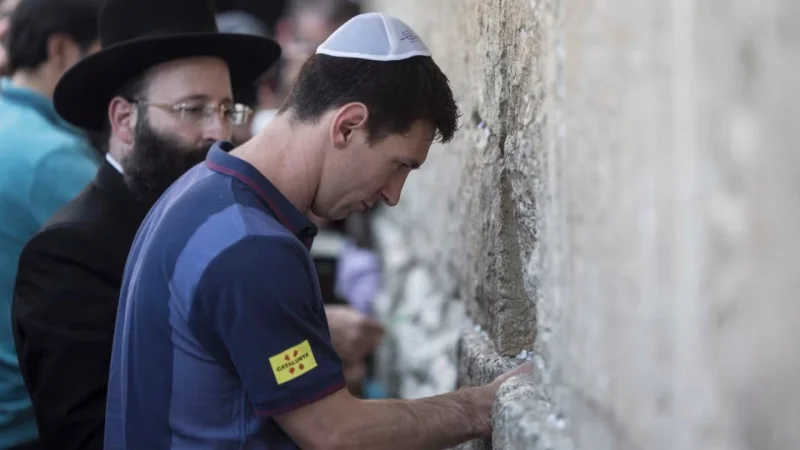
Lionel Messi has said only two political things in his career, both in 2020, and both cut against the image many fans have of him as a man who avoids the subject entirely. In one rare interview, he told Jordi Évole, “I don’t like talking about politics.”
That is why Messi In Israel is drawing attention now: not because he has become political, but because his silence has become part of the story around him. He said, “I watch, I listen, I like to learn, especially from my friends,” then added that politics “has become strange to people” and that parties now “look like soccer teams.”
He was not describing ideology so much as distance. Messi said, “People fight over them and no longer look at what good they can get from the other side,” before narrowing his own view to a simple civic wish: “But I want the best for my country, for those who have the least to be able to have things.” He then drew the line even more sharply: “But I don’t have any specific political definition.”
The second statement, also in 2020, came in a separate conversation with Garganta Poderosa, where Messi said inequality is one of society’s great problems and that it must be corrected as soon as possible. The two remarks sit awkwardly beside each other only if politics is treated as a fixed label. Messi’s version is narrower. He rejects the machinery of political identity, but not the idea that public life should leave the less fortunate better off.
That contradiction helps explain why he remains so marketable and so hard to corner. The article frames Messi as unusually silent in interviews, a global idol who rarely offers more than platitudes and has never once quoted a book or an author. It also says he was famous even before his 2004 Barcelona debut and that he seemed entirely indifferent to Catalan autonomy, which fits the same pattern: a life lived in public without the usual public loyalties attached.
There is one blunt friction point in the record. Messi is described as having no political opinions, yet he still spoke twice on political questions in 2020. The cleanest reading is that he does not want to campaign, endorse, or belong to a camp, but he does want to say enough to signal basic values when the subject is inequality or the direction of his country.
What comes next is less about another statement than about whether he breaks that pattern again. For now, the answer is still the one he gave Évole: he listens more than he speaks, and when he does speak, he keeps it short, guarded, and rare.