


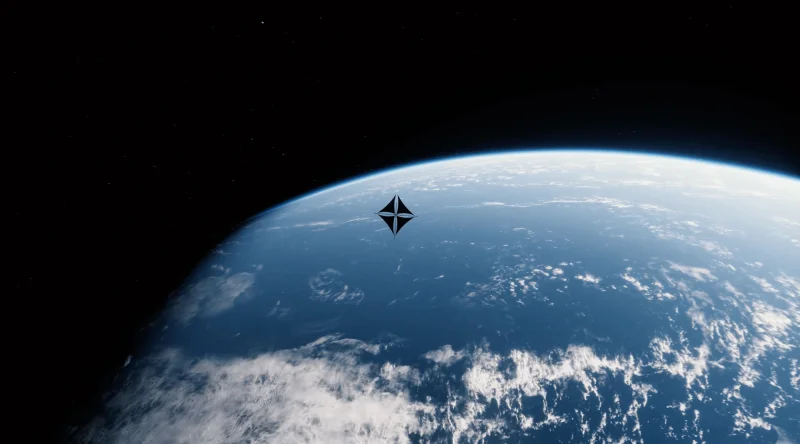
The Federal Communications Commission approved Reflect Orbital’s Eärendil-1 on July 9, clearing the way for the company’s first space test of orbital reflection. The 142-kilogram satellite is scheduled to launch later this year and will carry a thin-film reflector 18 meters on a side in low Earth orbit.
The goal is simple to describe and hard to execute: send reflected sunlight to specific areas on Earth for several minutes at a time. Ben Nowack called the license the first step toward rigorously testing the technology’s efficacy and the safeguards Reflect Orbital says it has developed, saying the company was grateful for the FCC’s recognition of “the importance of testing novel technologies in space.”

That approval lands now because the company’s application had been pending for nearly a year and had drawn nearly 1,900 comments, most of them critical. Reflect Orbital says it has seen strong interest in the concept for construction sites and search-and-rescue efforts, and it has also proposed using the satellites to reflect sunlight onto terrestrial solar farms to raise their output. The company is moving from a pitch to a live test, which is why the license matters more than another round of promises.
But the decision also exposed the fault line around the project. The FCC largely concluded in its order that any impacts on astronomy or the environment were outside its jurisdiction, even as astronomers and environmentalists warned that a constellation of such spacecraft could disrupt plant and animal cycles and interfere with telescope operations. Tony Tyson, who spoke at a National Academies meeting on June 4, said the plans were “even crazier” than the broadband satellite constellations astronomers have worried about for years, and he said he feared the thin-film reflectors would scatter light across a wider area instead of directing it cleanly.
That is the question hanging over Eärendil-1 now. The launch later this year will not settle whether orbital reflection can be aimed tightly enough to do what Reflect Orbital says it can do without turning the sky into a moving source of spillover light. It will, however, show whether the company can prove its safeguards in orbit, under the one condition that matters most: real sunlight, real distance and no room for abstraction.
