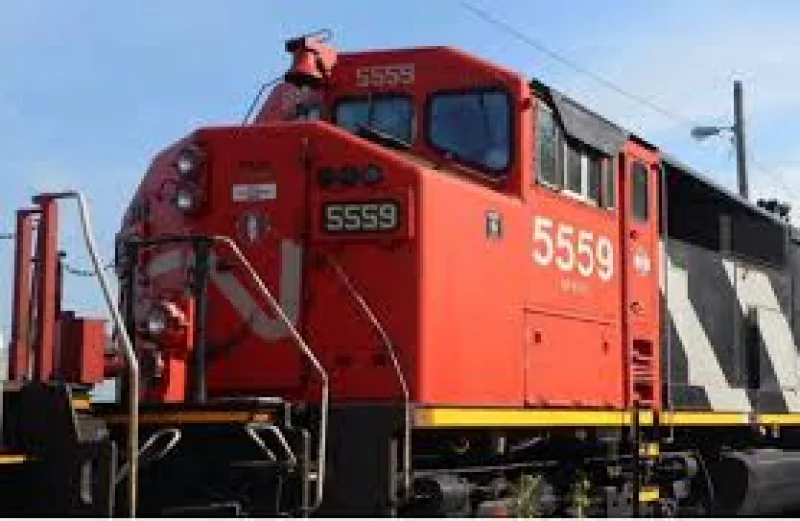
Wildfires ripped through parts of Canada on Tuesday as a record-breaking heat dome baked regions near the US border, sending smoke into Montreal and leaving a freight train engulfed in flames in Armstrong, Ontario. The sky over Montreal turned yellow in the morning as the smoke drifted in from fires in northern Quebec and north-western Ontario.
The freight train fire was captured on video, and the driver’s voice cut through the noise: “This could potentially overtake us here, this is getting a little scary, holy s--t. We’re encased in flames now.” It was the kind of raw field account that matched the scale of the day, with more than 100 million people under heat alerts and Ottawa and Toronto forecast to reach 38C.

Environment and Climate Change Canada warned that air quality could deteriorate enough to push the air quality health index toward the high-risk category. That warning mattered far beyond Montreal, because smoke from wildfires can travel long distances when hot, dry air keeps it moving and the heat dome traps it near the ground. Billings in southern Montana hit 44C on Tuesday, Salt Lake City reached 43C, and the US National Weather Service said the most intense heat would arrive in the North East on Wednesday before spreading into the Mid-Atlantic.
Marc Alessi said heat domes are a natural part of the climate system, but added that the atmosphere and oceans are now warmer and releasing more heat, making this one look like fossil fuel-driven climate change. A separate analysis by the World Weather Attribution group found the extreme heat and humidity that hit the east coast around the July 4 holiday would have been “virtually impossible” without human-caused climate change, underscoring how quickly extreme weather is reshaping what used to be exceptional.
Forecasters said the heat would ease in most areas by the end of the week, but the underlying heat dome was expected to persist for the rest of the month. That leaves the central question less about whether the worst heat will break and more about how much damage the longer spell of extreme conditions will do to air quality, wildfire behavior and the people living under both at once.