


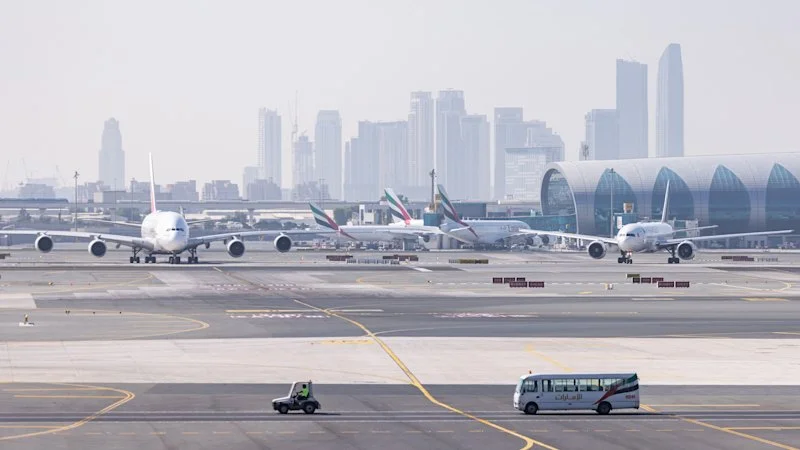
Flights into and out of Dubai International Airport are still running, but not as normal. Airlines using restricted airspace across the Gulf are operating reduced and limited schedules after fresh attacks and missile threats pushed more routes into disruption.
That matters now because the region is in the middle of the summer travel rush, when even small changes can strand families, add hours to journeys and force last-minute rebookings. Emirates is now flying to 137 destinations across 72 countries, which it says is 96 per cent of its previous global network, but the carrier is still operating more than 1,300 flights each week — about 75 per cent of its pre-war capacity.
The wider picture is uneven. Air travel across the region has remained stable, with limited cancellations and disruption, even as renewed US-Iran tensions ripple through the Gulf. Iranian attacks hit US-linked targets in Qatar, Oman, Jordan, Kuwait and Bahrain, while the Islamic Revolutionary Guard said on Tuesday it hit US military facilities in Bahrain and Jordan. Cruise missile strikes on two UAE supertankers killed one crew member and injured eight people, and Kuwait and Oman have faced missile and drone threats in recent days.

Airports in Dubai, Abu Dhabi, Bahrain, Doha, Kuwait, Tehran and Tel Aviv are all listed as operating with reduced and limited schedules because of restricted airspace. That does not mean flights have stopped. It means airlines are flying fewer services, trimming timetables and keeping some routes under close review, while several international carriers are still not flying to the Middle East at all or are only operating limited schedules.
Emirates has told passengers to check their flight status, even after they have checked in. It is also offering one complimentary date change for customers booked to travel after April 2, along with comprehensive travel insurance that includes conflict-related medical expense protection, a free 30-day trip extension, airline-managed hotel stays and support during disruption.
The ceasefire signed in a Memorandum of Understanding to end the conflict on 17 June has not stopped the pressure on aviation, and Donald Trump said the ceasefire was “over” when he arrived in Turkey ahead of the Nato summit. With Qatar and Pakistan stepping up diplomatic efforts, the unresolved question is how long airlines will keep these restricted schedules in place before the region’s main hubs can return to normal.
