


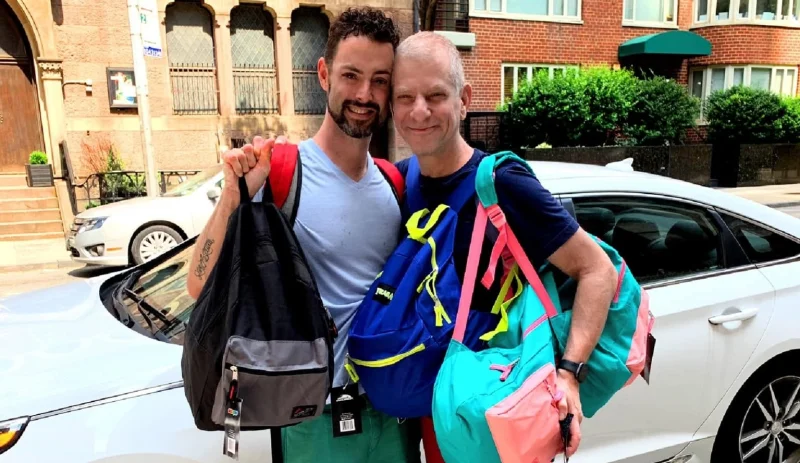
Jeffrey Newman died days after Jayson Conner, ending a 22-year partnership that had become a lifeline for New Yorkers living on the streets. The loss hit friends, family and the Hell’s Kitchen community all at once, and it left Backpacks For The Street tied to a story of service and grief.
People who knew the men best were trying to make sense of how quickly everything changed. For two weeks, word had been moving through the community that Conner had died suddenly after suffering cardiac arrest. Days later, Newman was gone too, and the shock only deepened because the pair had spent more than two decades building their work together around helping New Yorkers who had nowhere else to turn.
That is why their names kept circulating in Hell’s Kitchen. Their partnership was not a side project or a brief effort. It lasted 22 years, and it was described by those close to them as a lifeline for people living on the streets. In practical terms, that meant a relationship with the community built on repeated contact, trust and the kind of steady help that cannot be replaced by a one-time donation drive.

W42ST spoke with people who knew Newman and Conner best, and their accounts point to a service effort that was as personal as it was public. Backpacks For The Street was connected to the pair, but the work around them was larger than the name suggests. It was about getting basic help to people who needed it most, and about doing it over and over until the effort became part of the neighborhood’s rhythm.
The hardest part of the story is what has not been explained. Conner’s death is described as sudden, after cardiac arrest, but Newman’s cause of death has not been made public. That gap matters because the two deaths were so close together that they have been bound into one loss in the minds of those who knew them, even as one of the central facts remains missing.
For now, what is clear is the scale of what has ended. Two men, linked by life and service, are gone within days of each other, and the people around them are left with the memory of a partnership that steadied a corner of New York City. The unanswered question is not whether their work mattered. It did. The question is how the community they helped will carry that work forward without them.
